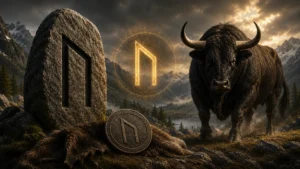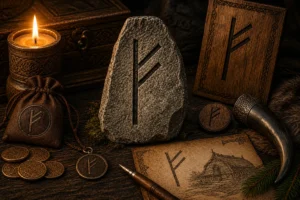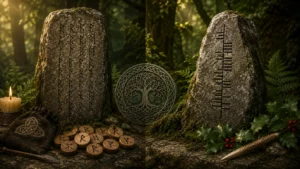

Runes are one of those things most people think they understand until someone asks them to actually explain it. You have probably seen them tattooed on someone’s arm, stitched into a fantasy movie prop, or scattered across a video game loading screen. But what are runes, really? And why have these ancient symbols survived for nearly two thousand years while entire empires crumbled around them?
This guide breaks it all down. No fluff, no made up mysticism. Just a clear, honest look at where runes came from, what they meant, and why they still matter today.
The Word “Rune” Literally Means Secret
Let’s start with the name itself because it tells you a lot.
The word “rune” traces back to the Old Norse rún, which translates to “secret,” “mystery,” or “whispered counsel.” Go even further back and you hit the Proto-Germanic rūnō, carrying the same weight. Something hidden. Something powerful.
That etymology is not decorative. It tells you exactly how the people who created runes thought about them. These were not casual doodles. The Germanic and Norse peoples who carved runes into stone, bone, and wood saw them as more than just letters. Each rune carried a sound, a name, and a concept behind it.
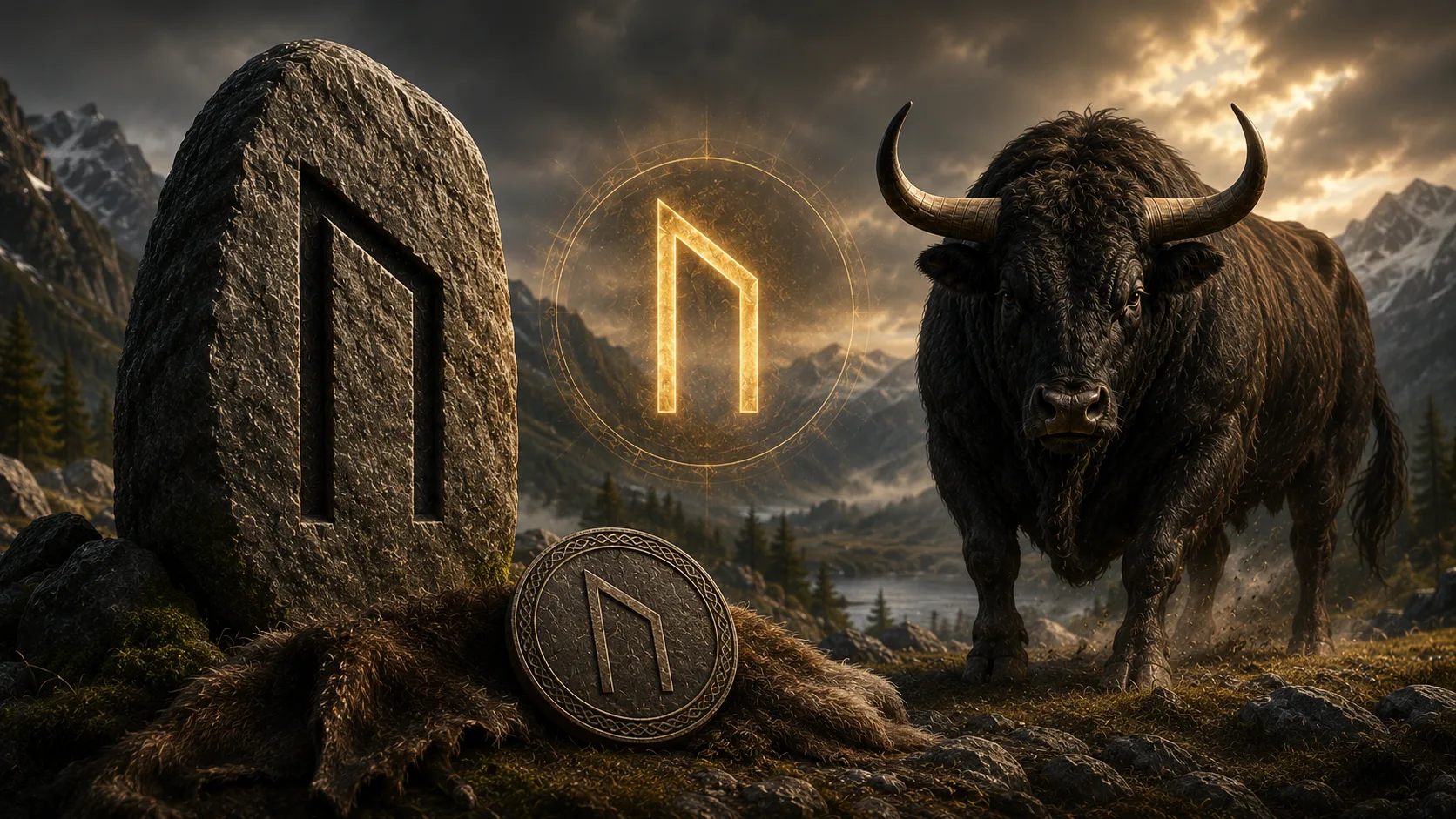
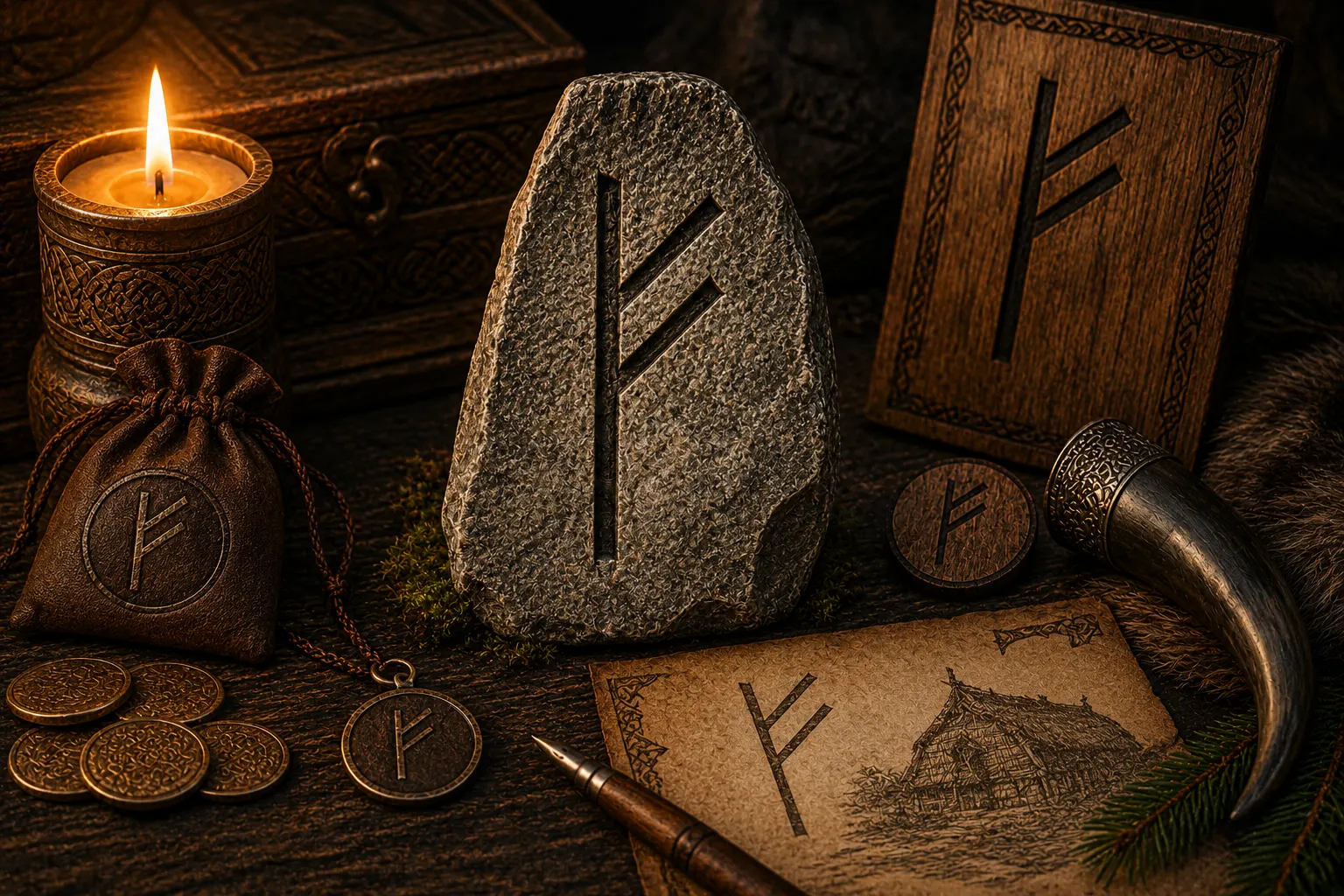
Think of it this way. Our letter “A” is just a sound. But a rune like Fehu (ᚠ) represented the “F” sound and the concept of wealth and cattle. Writing and meaning were fused together from the very start.
Where Did Runes Come From?
Here is where things get interesting and a little murky.
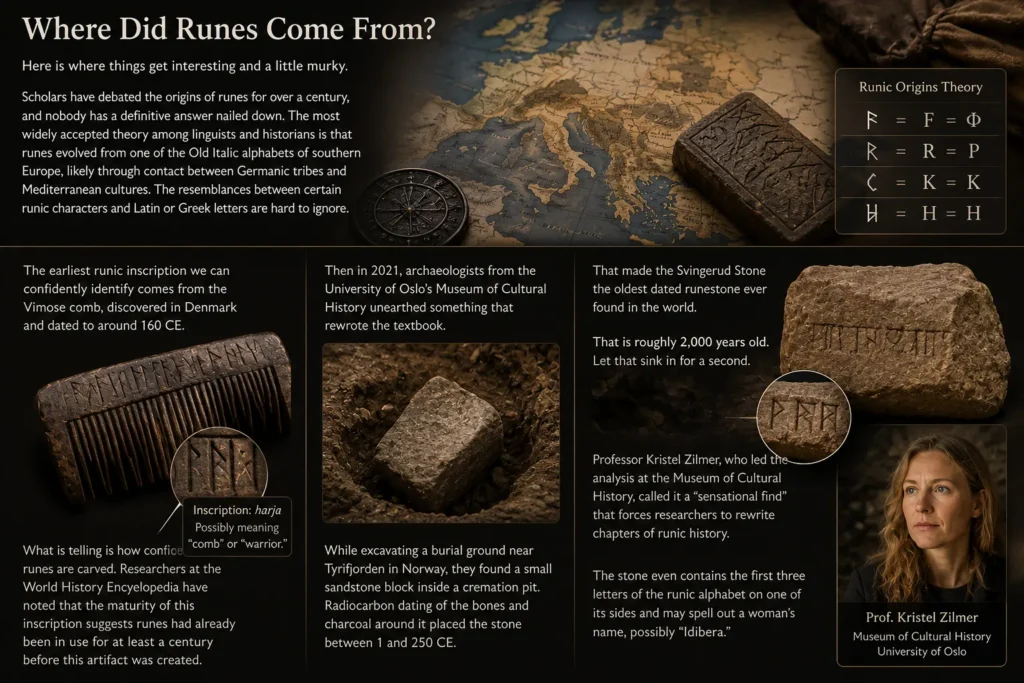
Scholars have debated the origins of runes for over a century, and nobody has a definitive answer nailed down. The most widely accepted theory among linguists and historians is that runes evolved from one of the Old Italic alphabets of southern Europe, likely through contact between Germanic tribes and Mediterranean cultures. The resemblances between certain runic characters and Latin or Greek letters are hard to ignore.
The earliest runic inscription we can confidently identify comes from the Vimose comb, discovered in Denmark and dated to around 160 CE. It reads harja, possibly meaning “comb” or “warrior.” What is telling is how confidently the runes are carved. Researchers at the World History Encyclopedia have noted that the maturity of this inscription suggests runes had already been in use for at least a century before this artifact was created.
Then in 2021, archaeologists from the University of Oslo’s Museum of Cultural History unearthed something that rewrote the textbook. While excavating a burial ground near Tyrifjorden in Norway, they found a small sandstone block inside a cremation pit. Radiocarbon dating of the bones and charcoal around it placed the stone between 1 and 250 CE. That made the Svingerud Stone the oldest dated runestone ever found in the world.
That is roughly 2,000 years old. Let that sink in for a second.
Professor Kristel Zilmer, who led the analysis at the Museum of Cultural History, called it a “sensational find” that forces researchers to rewrite chapters of runic history. The stone even contains the first three letters of the runic alphabet on one of its sides and may spell out a woman’s name, possibly “Idibera.”
The Mythological Origin: Odin’s Sacrifice
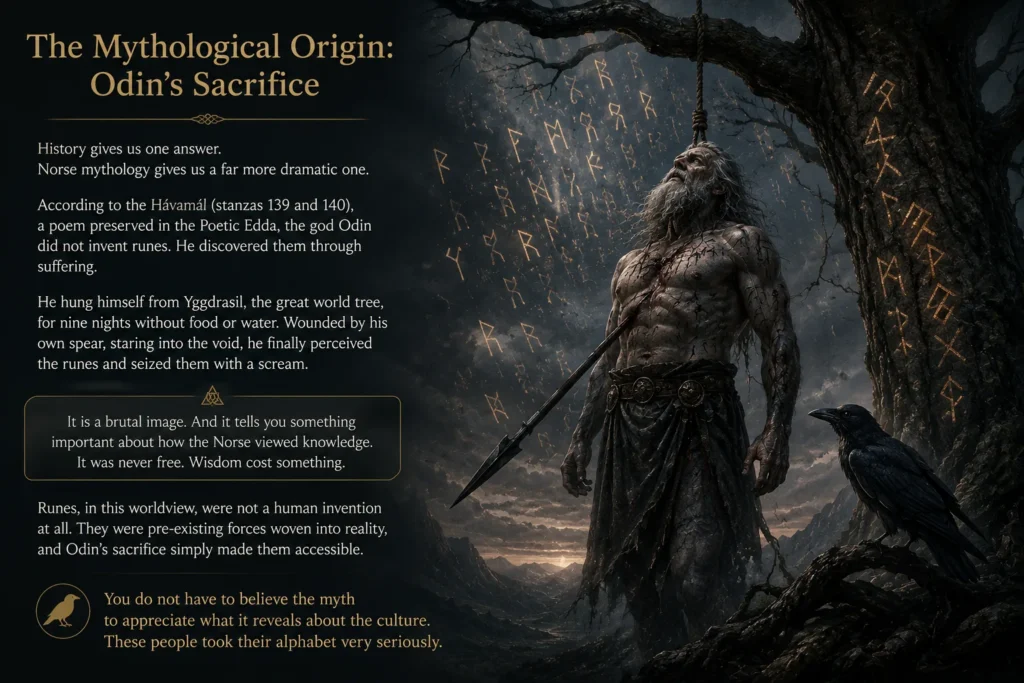
History gives us one answer. Norse mythology gives us a far more dramatic one.
According to the Hávamál (stanzas 139 and 140), a poem preserved in the Poetic Edda, the god Odin did not invent runes. He discovered them through suffering. He hung himself from Yggdrasil, the great world tree, for nine nights without food or water. Wounded by his own spear, staring into the void, he finally perceived the runes and seized them with a scream.
It is a brutal image. And it tells you something important about how the Norse viewed knowledge. It was never free. Wisdom cost something. Runes, in this worldview, were not a human invention at all. They were pre-existing forces woven into reality, and Odin’s sacrifice simply made them accessible.
You do not have to believe the myth to appreciate what it reveals about the culture. These people took their alphabet very seriously.
The Three Major Runic Alphabets
Runes did not stay frozen in time. Like any writing system, they evolved as the people who used them spread across Europe and their languages changed. Three major runic systems emerged over the centuries, and understanding the differences between them is essential for anyone exploring this subject.
Elder Futhark (Around 150 to 700 CE)
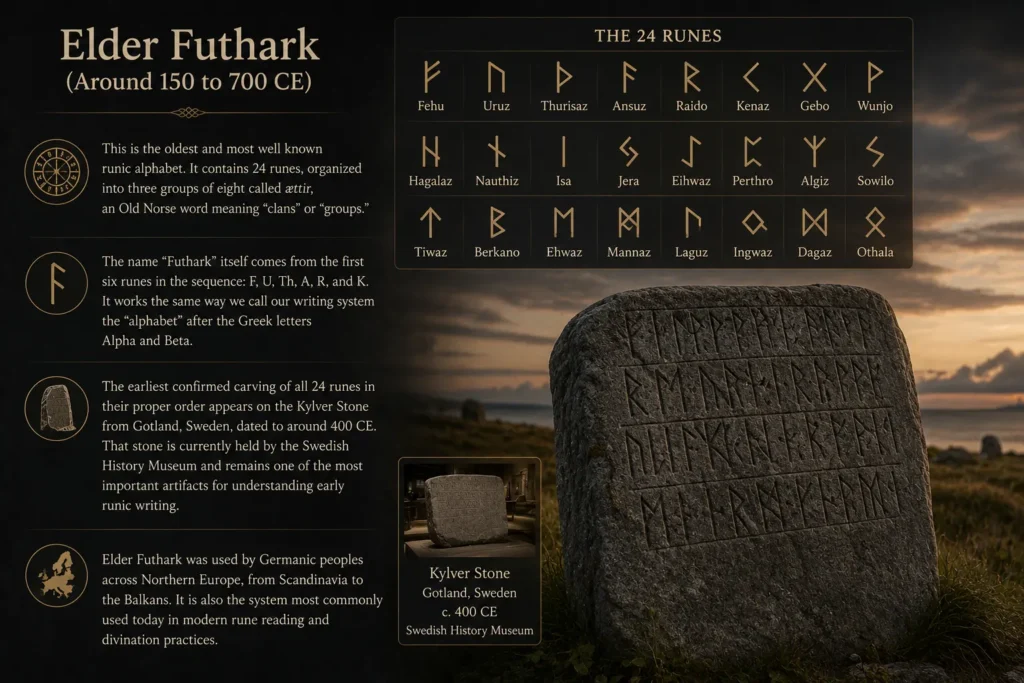
This is the oldest and most well known runic alphabet. It contains 24 runes, organized into three groups of eight called ættir, an Old Norse word meaning “clans” or “groups.” The name “Futhark” itself comes from the first six runes in the sequence: F, U, Th, A, R, and K. It works the same way we call our writing system the “alphabet” after the Greek letters Alpha and Beta.
The earliest confirmed carving of all 24 runes in their proper order appears on the Kylver Stone from Gotland, Sweden, dated to around 400 CE. That stone is currently held by the Swedish History Museum and remains one of the most important artifacts for understanding early runic writing.
Elder Futhark was used by Germanic peoples across Northern Europe, from Scandinavia to the Balkans. It is also the system most commonly used today in modern rune reading and divination practices.
Younger Futhark (Around 800 to 1100 CE)
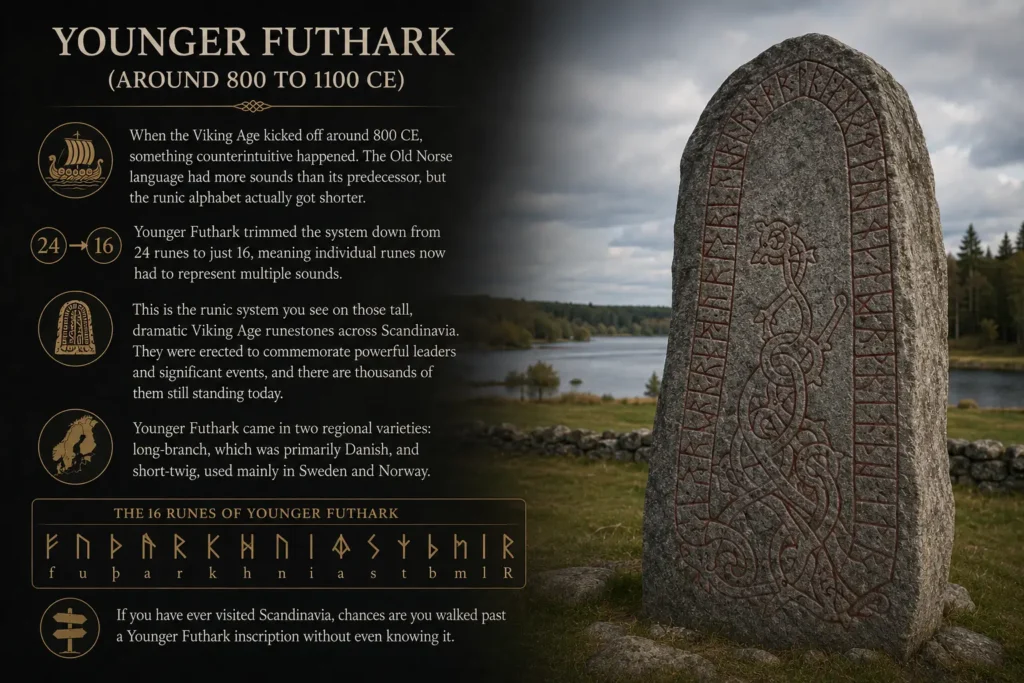
When the Viking Age kicked off around 800 CE, something counterintuitive happened. The Old Norse language had more sounds than its predecessor, but the runic alphabet actually got shorter. Younger Futhark trimmed the system down from 24 runes to just 16, meaning individual runes now had to represent multiple sounds.
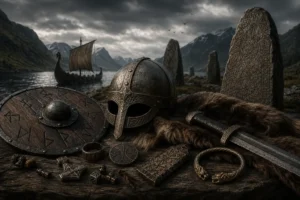
This is the runic system you see on those tall, dramatic Viking Age runestones across Scandinavia. They were erected to commemorate powerful leaders and significant events, and there are thousands of them still standing today. Younger Futhark came in two regional varieties: long-branch, which was primarily Danish, and short-twig, used mainly in Sweden and Norway.
If you have ever visited Scandinavia, chances are you walked past a Younger Futhark inscription without even knowing it.
Anglo-Saxon Futhorc (Around 5th to 11th Century CE)
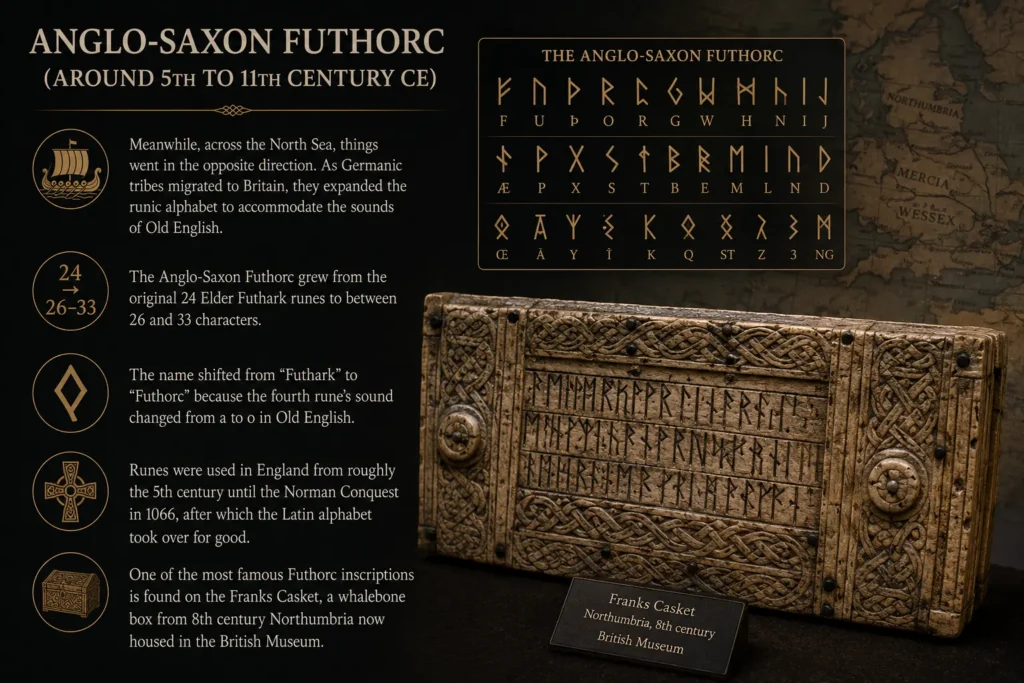
Meanwhile, across the North Sea, things went in the opposite direction. As Germanic tribes migrated to Britain, they expanded the runic alphabet to accommodate the sounds of Old English. The Anglo-Saxon Futhorc grew from the original 24 Elder Futhark runes to between 26 and 33 characters.
The name shifted from “Futhark” to “Futhorc” because the fourth rune’s sound changed from a to o in Old English. Runes were used in England from roughly the 5th century until the Norman Conquest in 1066, after which the Latin alphabet took over for good.
One of the most famous Futhorc inscriptions is found on the Franks Casket, a whalebone box from 8th century Northumbria now housed in the British Museum.
Why Do Runes Look So Angular?
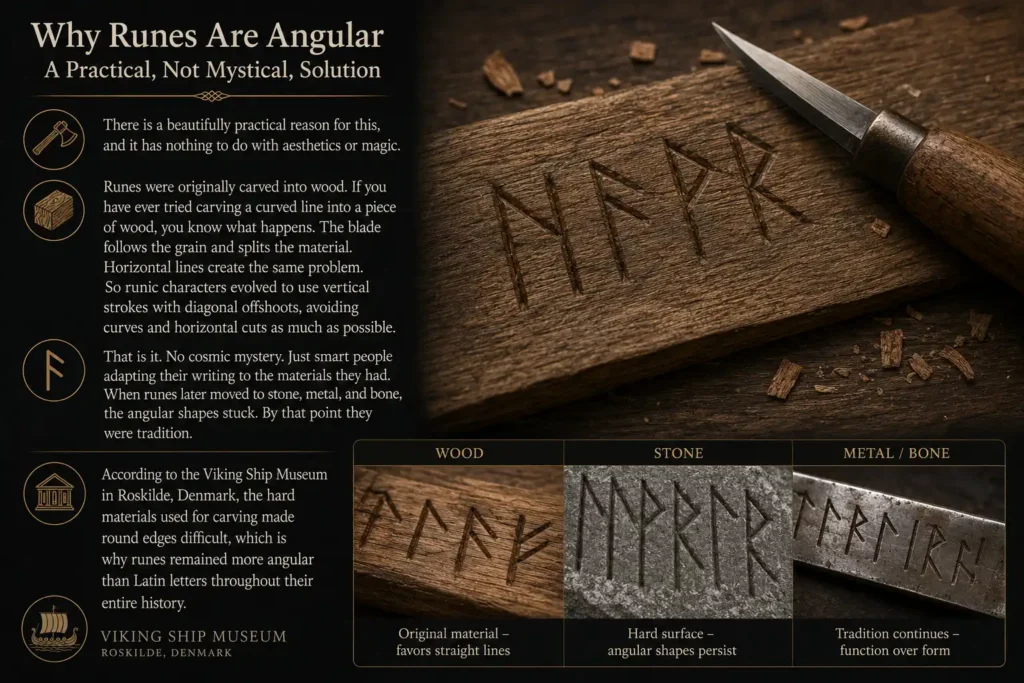
There is a beautifully practical reason for this, and it has nothing to do with aesthetics or magic.
Runes were originally carved into wood. If you have ever tried carving a curved line into a piece of wood, you know what happens. The blade follows the grain and splits the material. Horizontal lines create the same problem. So runic characters evolved to use vertical strokes with diagonal offshoots, avoiding curves and horizontal cuts as much as possible.
That is it. No cosmic mystery. Just smart people adapting their writing to the materials they had. When runes later moved to stone, metal, and bone, the angular shapes stuck. By that point they were tradition.
According to the Viking Ship Museum in Roskilde, Denmark, the hard materials used for carving made round edges difficult, which is why runes remained more angular than Latin letters throughout their entire history.
Runes Were Not Just for Writing
Here is where many beginners get confused. Runes served double duty throughout their history.
On one hand, they were a perfectly functional writing system. People carved ownership marks on combs, labeled weapons, left messages on everyday objects, and memorialized the dead on runestones. Short runic inscriptions appear on everyday artifacts from Viking towns and marketplaces across Scandinavia.
On the other hand, runes carried a strong association with magic and ritual. The Poetic Edda contains references to runes being used for healing, protection, victory in battle, and cursing enemies. Archaeological evidence supports this as well. The Lindholm Amulet, a carved bone dating to between 375 and 570 CE, bears a runic inscription that scholars believe was intended to invoke divine power.
But here is an important distinction. There is not strong historical evidence that runes were widely used for fortune telling in the ancient world the way modern practitioners use them. Most documented magical uses involved actively changing outcomes, like giving courage, cursing rivals, or blessing births, rather than passively predicting the future.
How Runes Are Used Today
Modern interest in runes falls into a few distinct camps.
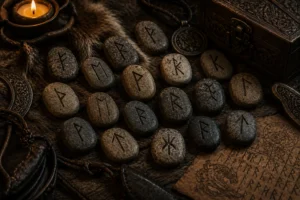
Many people use rune sets, typically stones or wooden pieces inscribed with Elder Futhark symbols, for divination and personal reflection. This practice draws more from 20th century revival movements than from documented Viking era tradition, but it has built a genuine community of practitioners who find real value in the system.
Scholars and linguists continue to study runic inscriptions to understand Germanic languages, migration patterns, and cultural practices. New discoveries like the Svingerud Stone regularly reshape what we know about the earliest days of runic writing.
And then there is pop culture. Runes appear in everything from Tolkien’s Middle-earth to the Marvel Thor franchise to countless video games. J.R.R. Tolkien himself was a philologist who studied Old English and Old Norse, and he created several fictional writing systems directly inspired by real runic alphabets. So every time you see Dwarvish script in Lord of the Rings, you are looking at a cousin of real runes.
Common Misconceptions About Runes
A few things worth clearing up before you dive deeper into your runic journey.
Runes are not exclusively “Viking.” Elder Futhark predates the Viking Age by centuries. Calling all runes “Viking runes” is like calling the Latin alphabet “Italian.” It is technically connected but misses a lot of context.
Runes were not a single standardised alphabet. Regional variations existed from the very beginning. Shapes, order, and usage shifted depending on where and when they were carved. There was never one “correct” set of runes used everywhere.
Runes did not disappear overnight. In parts of Sweden and among the Sami people, runic writing lingered well into the Middle Ages and possibly beyond. The transition to the Latin alphabet happened gradually across several centuries, not like flipping a switch.
Where to Go From Here
If this guide sparked your curiosity, you are in the right place. Understanding what runes are is the first step. The next is learning what each individual rune means, how the three ættir of Elder Futhark are structured, and how people, both ancient and modern, have interpreted these powerful symbols.
The runic world is deeper than most people expect. Two thousand years of history, multiple alphabets, mythological weight, and a surprising amount of practical engineering behind those angular shapes. Not bad for a bunch of straight lines carved into wood.