
If you have ever looked at a list of runes and their meanings, you probably noticed something odd. Different sources give different answers. One website says Thurisaz means “protection.” Another says “chaos.” A third says “Thor’s hammer.” And somehow, all of them claim to be right.
Here is the truth. Runes are not like modern letters that carry a single fixed definition. Each rune holds a name, a sound, and a concept, and that concept shifts depending on who interpreted it, when they wrote it down, and what tradition they were drawing from. Understanding runes meanings properly means knowing where those meanings actually come from and why they sometimes contradict each other.
This guide covers every symbol in the Elder Futhark, the 24 rune system that serves as the foundation for virtually all modern rune reading. But more importantly, it explains why each rune means what it means, so you are not just memorising a list. You are actually understanding it.
Where Do Rune Meanings Come From?
This is the question most guides skip, and it is the most important one.
There is no surviving Elder Futhark rune poem. The three medieval rune poems we have are the Anglo-Saxon Rune Poem (tentatively dated to the 9th century, surviving only through an 18th century copy after the original was destroyed in a fire), the Norwegian Rune Poem (preserved in a 17th century copy of a lost 13th century manuscript), and the Icelandic Rune Poem (recorded in manuscripts dating from around 1500).
These poems were mnemonic devices, short verses that helped people remember what each rune name meant. Scholars have used them, alongside Gothic alphabet records and archaeological context, to reconstruct the Elder Futhark rune meanings we use today. The reconstructions are solid, but they are still reconstructions. Keep that in mind as you study.
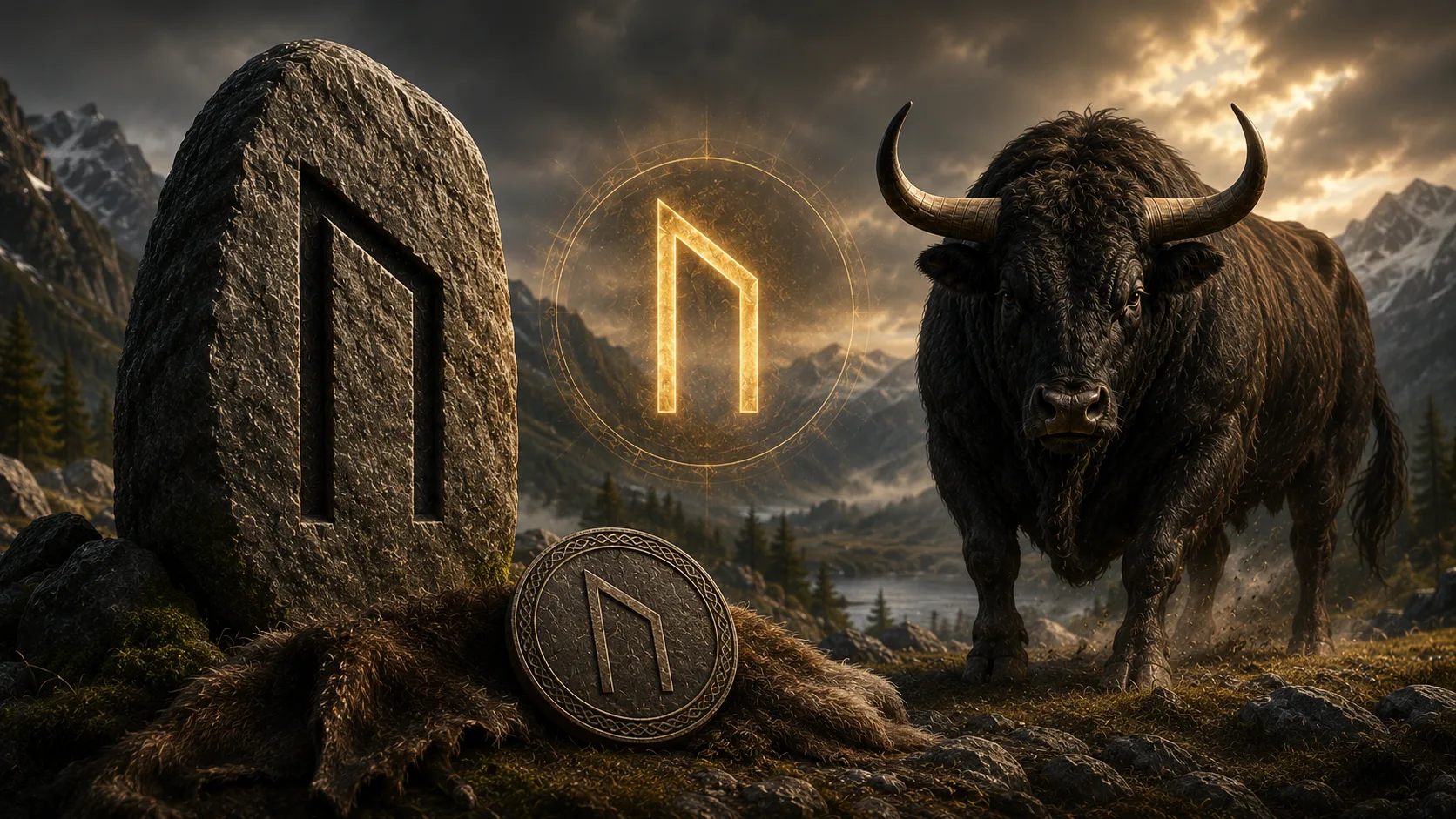
The rune poems also sometimes disagree with each other. The Anglo-Saxon poem describes Uruz as an aurochs, a fierce wild ox. The Norwegian poem calls it “slag” from iron smelting. The Icelandic poem says it means “rain.” Same rune, three different images. This is not a flaw. It reflects how living symbols evolve across cultures and centuries.
Every Elder Futhark Rune and Its Meaning
The 24 runes are divided into three groups of eight called ættir. Each ætt carries its own thematic arc, moving from the material world through hardship and into the spiritual realm.
First Ætt: The Material World
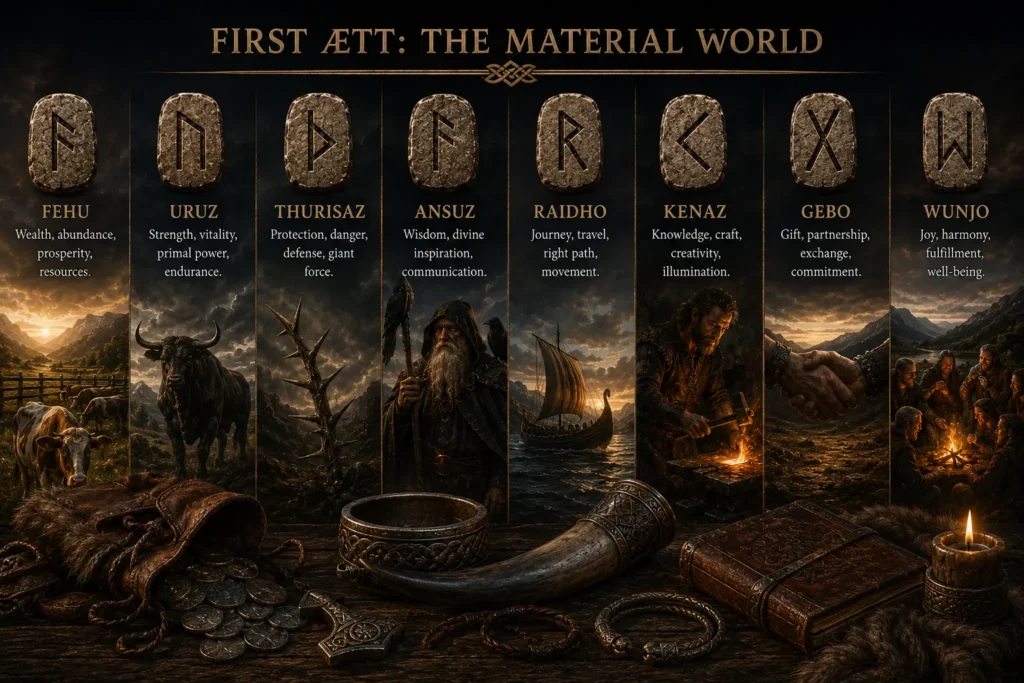
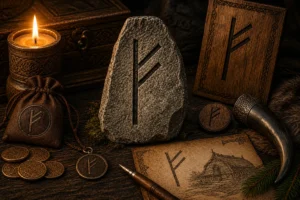
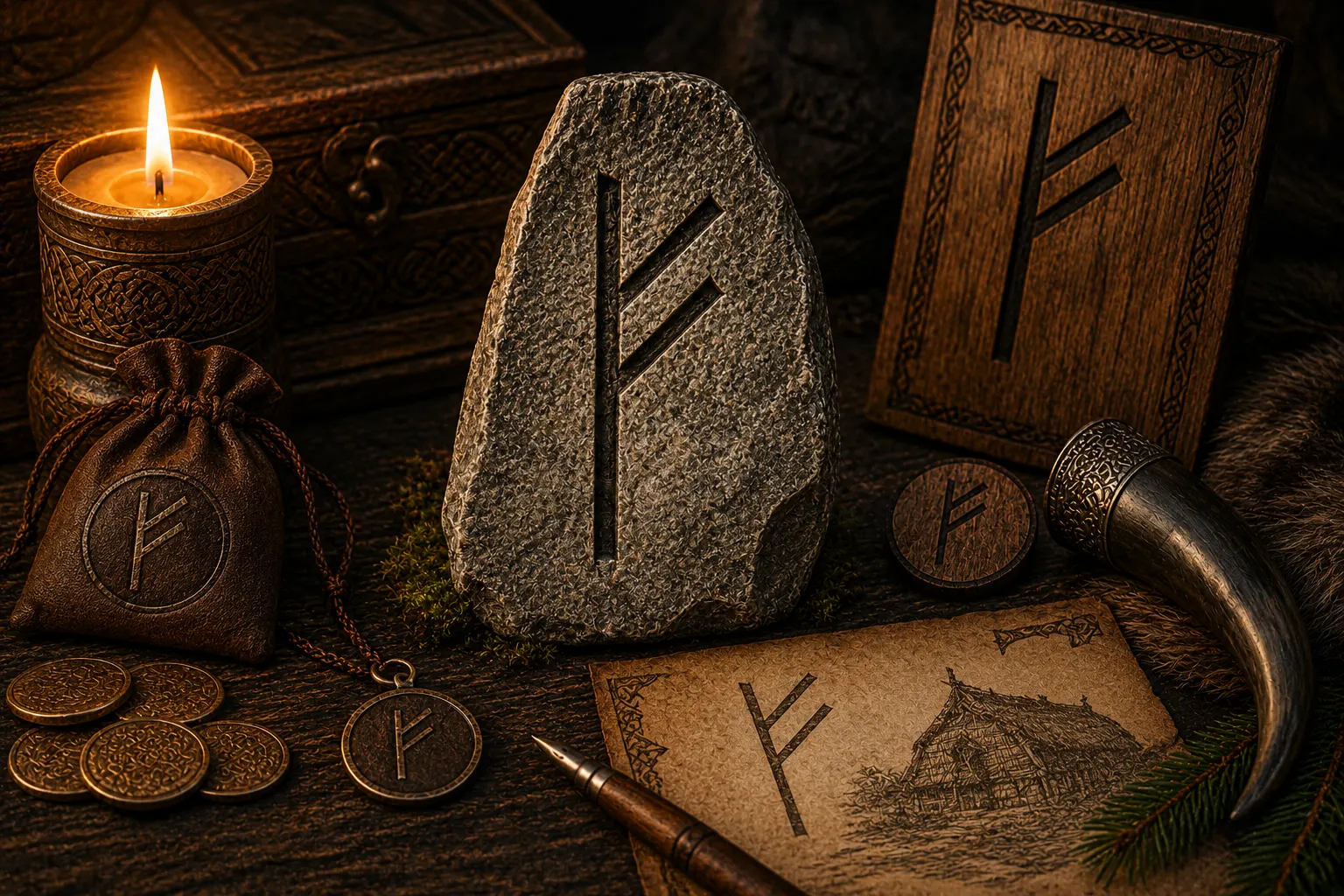
Fehu (ᚠ) means wealth, specifically cattle. It represents prosperity, abundance, and the flow of resources. But the rune poems also warn that wealth must be shared generously, or it breeds conflict.
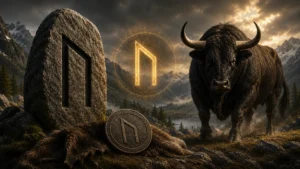
Uruz (ᚢ) means aurochs, the extinct wild ox. It symbolises raw physical strength, vitality, and untamed power. This is energy in its most primal form, before it has been shaped or directed.
Thurisaz (ᚦ) means giant or thorn. It represents reactive force, danger, and conflict, but also the kind of sharp boundary that protects what lies behind it. A thorn keeps intruders away from the flower.
Ansuz (ᚨ) means god, specifically Odin. It represents divine communication, wisdom, the spoken word, and the breath of inspiration. This is the rune of poets, teachers, and anyone who shapes reality through language.
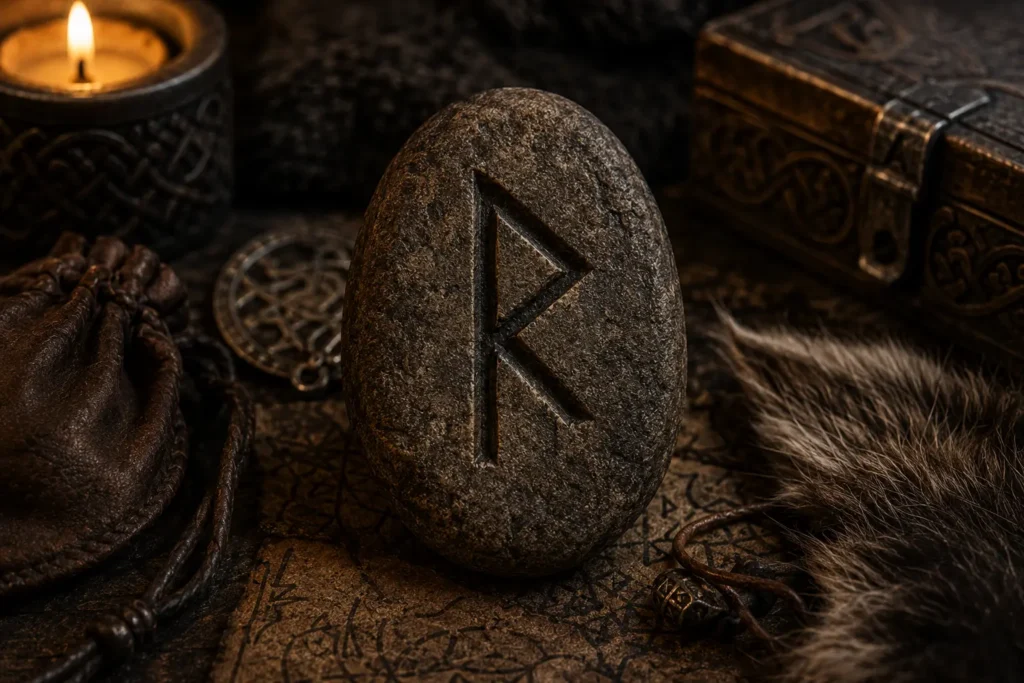
Raidho (ᚱ) means ride or journey. It covers physical travel, life’s path, rhythm, and the idea that forward movement requires both direction and effort.
Kenaz (ᚲ) means torch. It symbolises controlled fire, knowledge, craft, and creative vision. Where Uruz is raw power, Kenaz is that power put to skilled use.
Gebo (ᚷ) means gift. It represents exchange, generosity, partnership, and the sacred social bonds created through giving. In Norse culture, a gift always created an obligation. Nothing was truly free.
Wunjo (ᚹ) means joy. It symbolises happiness, harmony, fellowship, and the deep satisfaction that comes when effort pays off and things fall into place.
Second Ætt: Challenge and Endurance
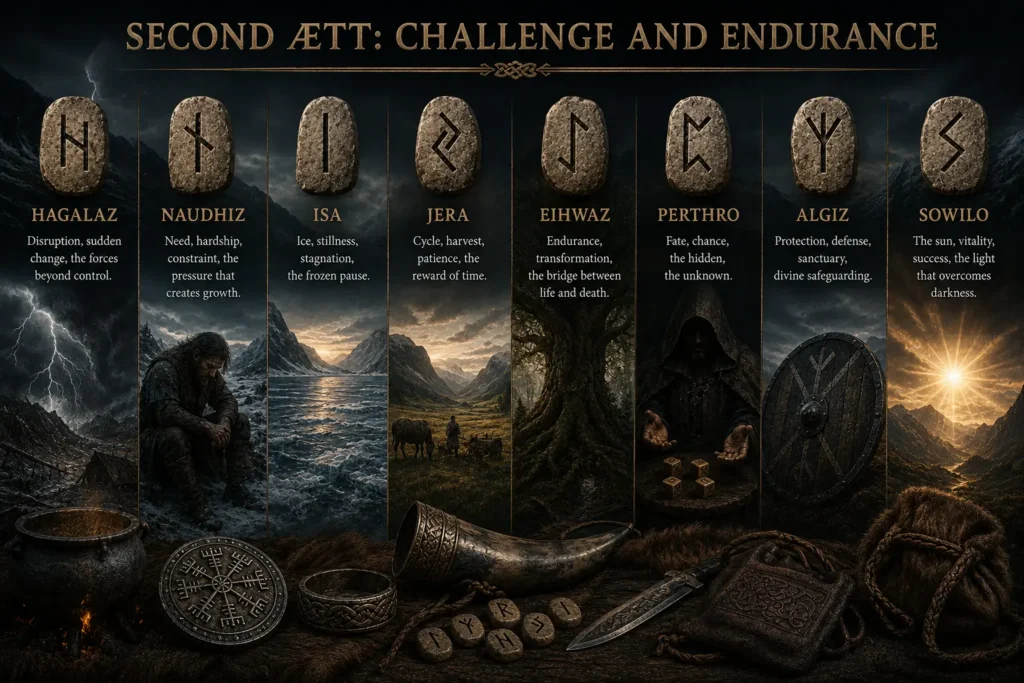
Hagalaz (ᚺ) means hail. It represents sudden destruction, uncontrollable forces, and the crisis that clears the ground so something new can grow. You do not choose when the hail falls.
Naudhiz (ᚾ) means need or distress. It points to hardship, constraint, and the pressure that forces innovation. The Norwegian Rune Poem describes it bluntly: “Constraint gives scant choice.”
Isa (ᛁ) means ice. It symbolises stillness, stagnation, and the frozen pause where nothing moves. This can be dangerous, but it can also be a necessary period of rest and clarity before action.
Jera (ᛃ) means year or harvest. It represents the reward of patience, the natural turning of seasons, and the understanding that everything happens in its own time. You plant in spring. You harvest in autumn. There is no shortcut.
Eihwaz (ᛇ) means yew tree. The yew is evergreen, extremely long lived, and poisonous. This rune represents endurance, the link between life and death, and the kind of resilience that outlasts everything around it.
Perthro (ᛈ) is the most debated rune. Its meaning remains uncertain among scholars. Most associate it with chance, fate, or a dice cup. It points to the hidden, the unknown, and the role of luck in human affairs.
Algiz (ᛉ) means elk or protection. Its branching shape resembles antlers or raised hands. It is one of the most widely recognised protective symbols in the entire runic system and appears frequently on ancient amulets.
Sowilo (ᛊ) means sun. It represents victory, vitality, wholeness, and the life giving force that returns after the darkest winter. This rune carries no reversed interpretation because the sun is the sun. It always shines.
Third Ætt: Spirit and Legacy
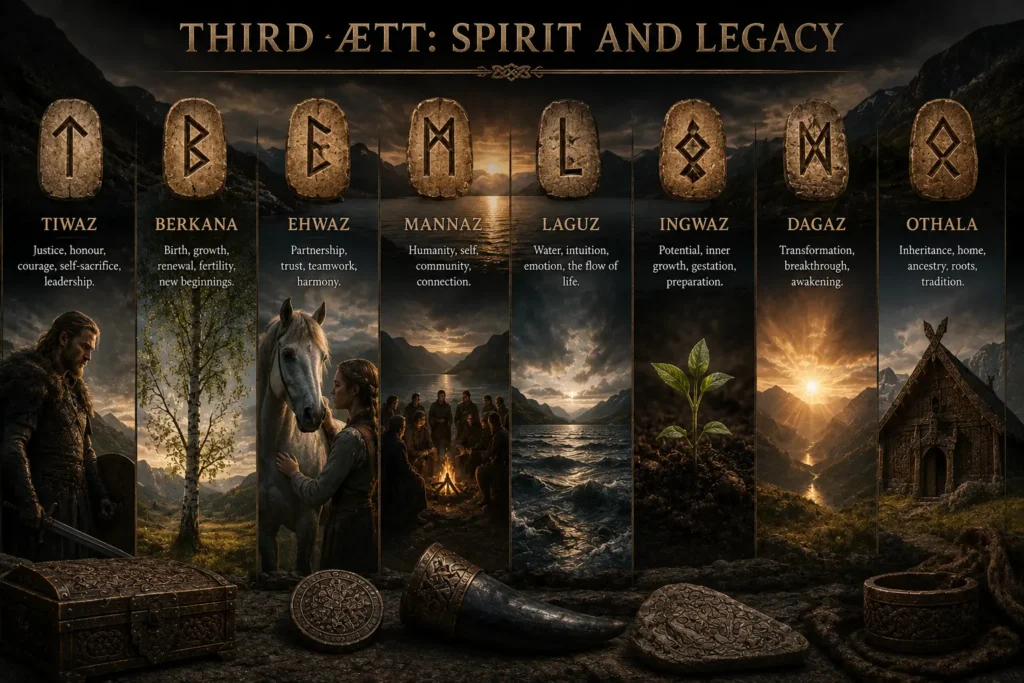
Tiwaz (ᛏ) is named after Tyr, the god who sacrificed his hand to bind the wolf Fenrir. It represents justice, honour, duty, and the willingness to pay a personal cost for what is right.
Berkanan (ᛒ) means birch. The birch tree is one of the first to return after winter, making it a symbol of new beginnings, fertility, renewal, and quiet, steady growth.
Ehwaz (ᛖ) means horse. It symbolises partnership, trust, loyalty, and the cooperative relationship between rider and mount. It extends to any bond built on mutual respect and shared direction.
Mannaz (ᛗ) means human. It represents humanity, self-awareness, community, intelligence, and the social fabric that holds people together. This rune looks inward as much as it looks outward.
Laguz (ᛚ) means water. It symbolises flow, intuition, the unconscious mind, and the deep, unpredictable power of the sea. For the Norse seafarers, water was both mother and monster.
Ingwaz (ᛜ) is named after the god Ing (Freyr). It represents internal growth, stored potential, gestation, and the quiet period before something emerges. Think of a seed in winter soil, alive but not yet visible.
Dagaz (ᛞ) means day or dawn. It represents breakthrough, transformation, awakening, and the decisive moment when darkness gives way to light. Like Sowilo, this rune is symmetrical and carries no reversal.
Othala (ᛟ) means ancestral homeland. It represents inheritance, belonging, tradition, family legacy, and the deep roots that connect you to where you came from. As the final rune, it closes the cycle with a return home.
The Reversed Runes Debate: What You Should Know
If you have seen rune guides that list “reversed” or “merkstave” meanings for each symbol, you should know where that practice actually comes from.
Reversed rune interpretations were popularised by Ralph Blum in his 1982 book The Book of Runes. Blum modelled the concept on reversed Tarot cards, and it caught on widely. However, there is no historical evidence that the Norse or any other Germanic peoples read runes upside down with altered meanings.
There is also a practical problem. Seven of the 24 Elder Futhark runes are vertically symmetrical, including Gebo, Isa, Jera, Eihwaz, Sowilo, Ingwaz, and Dagaz. These runes look exactly the same upside down, which means they physically cannot be “reversed.”
Many modern practitioners still use reversed readings and find genuine value in them. That is a valid personal practice. But if accuracy to the historical tradition matters to you, it is worth knowing that each rune was originally understood to contain both positive and challenging dimensions within its upright meaning. Shadow and light lived in the same symbol.
The Blank Rune Is Not Historical
Some modern rune sets include a 25th blank piece, sometimes called “Odin’s Rune” or the “Wyrd Rune.” This was also introduced by Ralph Blum in 1982. There is no archaeological or textual evidence that a blank rune existed in any historical runic tradition. If your set includes one, you are free to use it or set it aside. Just know it is a modern addition, not an ancient one.
How to Actually Learn Rune Meanings
Memorising a list is a starting point, not the finish line. The runes and their meanings become real when you understand the world they came from. Cattle was currency. Ice could kill you. The sun was not a metaphor. Journeys were genuinely dangerous. Every rune name pointed to something the Norse encountered in daily life, and the meaning grew from that encounter.
If you want the broader historical context behind these symbols, our guide to Norse runes and how they were used covers the cultural backdrop in detail. And for a deep look at the runic system itself, the complete beginner’s guide to runes explains how the three major runic alphabets connect and evolved over time.
The best way to learn is one rune at a time, lived with and thought about, not just glanced at and forgotten.