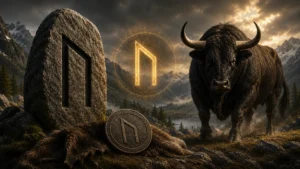

The animal behind the Uruz rune stood nearly six feet tall at the shoulder, weighed over 2,200 pounds, and had horns that could reach 80 centimetres in length. Julius Caesar, encountering them during the Gallic Wars, described them as “a little below the elephant in size” and warned that “their strength and speed are extraordinary; they spare neither man nor wild beast.”
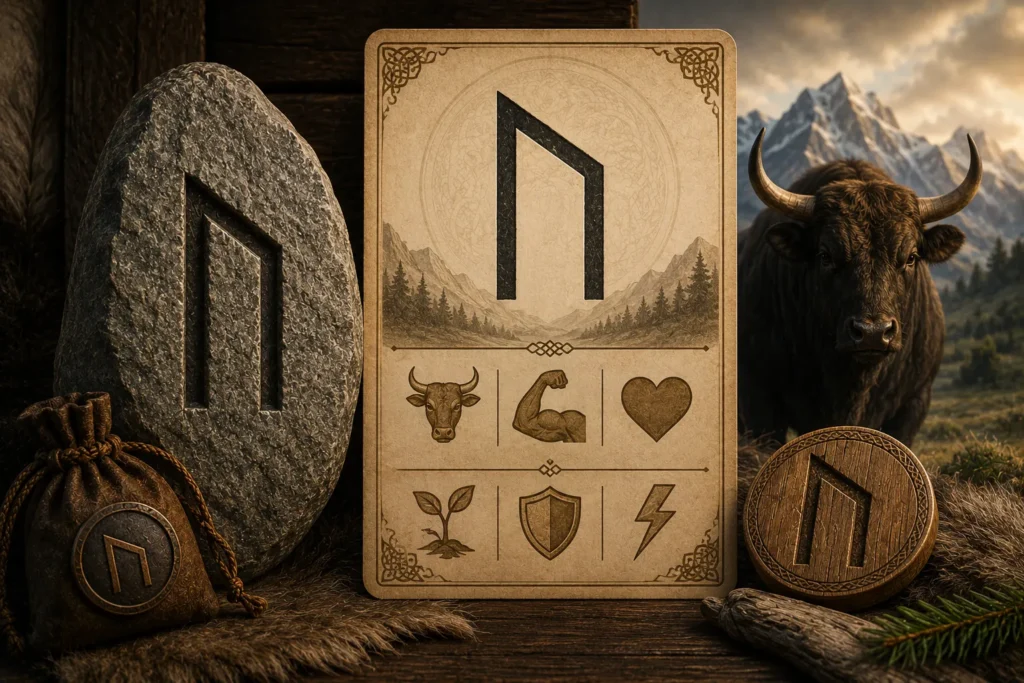
That animal was the aurochs, the wild ancestor of all modern cattle. And it is the creature that gave Uruz (ᚢ), the second rune of the Elder Futhark, its meaning. The uruz rune meaning is raw, untamed power. Not the managed, domesticated wealth of Fehu. Something wilder. Something that could kill you or sustain you, depending on how you approached it.
The Aurochs: The Real Animal Behind the Rune
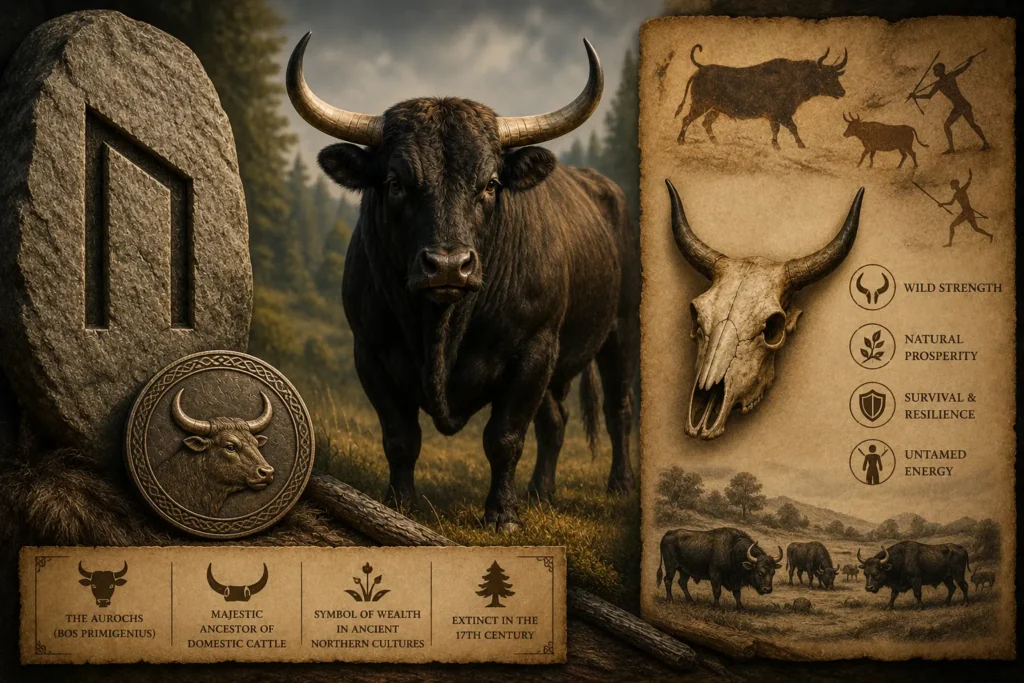
You cannot fully understand the uruz rune meaning without understanding the animal it represents. Modern cows do not even come close to capturing what the aurochs was.
The aurochs (Bos primigenius) roamed across Europe, Asia, and North Africa for hundreds of thousands of years. Our ancestors painted them on cave walls at Lascaux in France over 17,000 years ago. The Romans pitted gladiators against them. Germanic hunters treated killing one as a rite of passage, proof that a young person had the courage and skill to face something genuinely dangerous.
According to Wikipedia’s compiled research on the species, bulls stood up to 180 cm (about 5 feet 11 inches) at the shoulder, with massive elongated horns reaching 80 cm in length. These were not docile grazers. They were fast, aggressive, and built to fight off predators including wolves and the now-extinct cave lion.
The last aurochs on earth, a single cow, died in Poland’s Jaktorów Forest in 1627. It was the first animal extinction to be documented by humans. Every domestic cow alive today descends from aurochs that were tamed roughly 10,000 years ago in the Near East, but the wild original is gone.
When a Norse person carved the Uruz rune, they were invoking an animal that embodied power in its most uncompromising form. Not power you control. Power that exists whether you are ready for it or not.
Where Uruz Sits in the Elder Futhark
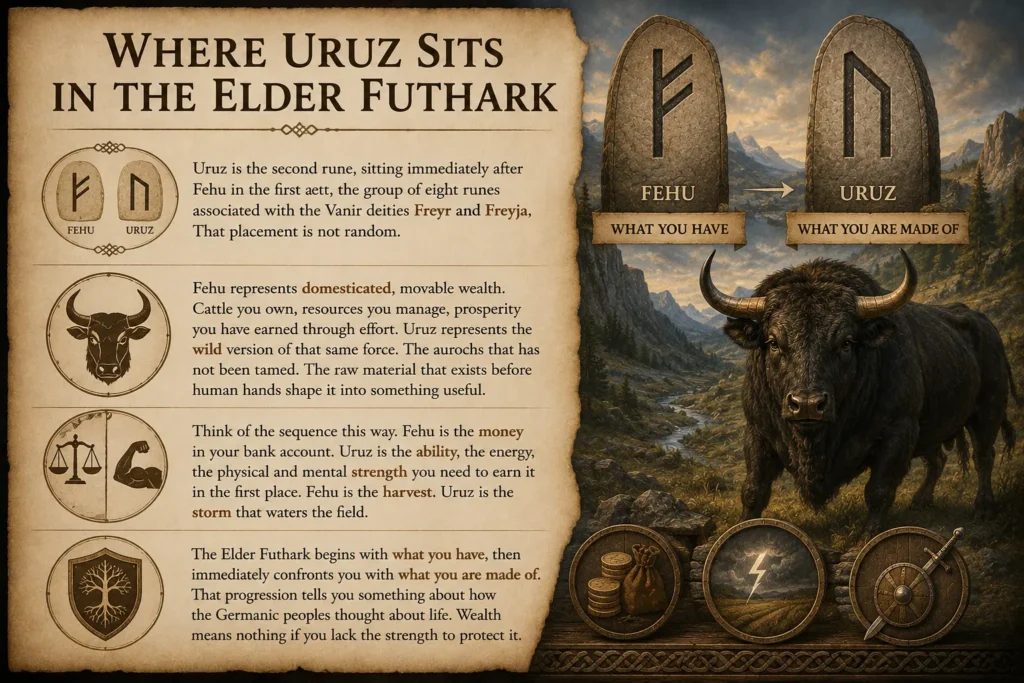
Uruz is the second rune, sitting immediately after Fehu in the first ætt, the group of eight runes associated with the Vanir deities Freyr and Freyja. That placement is not random.
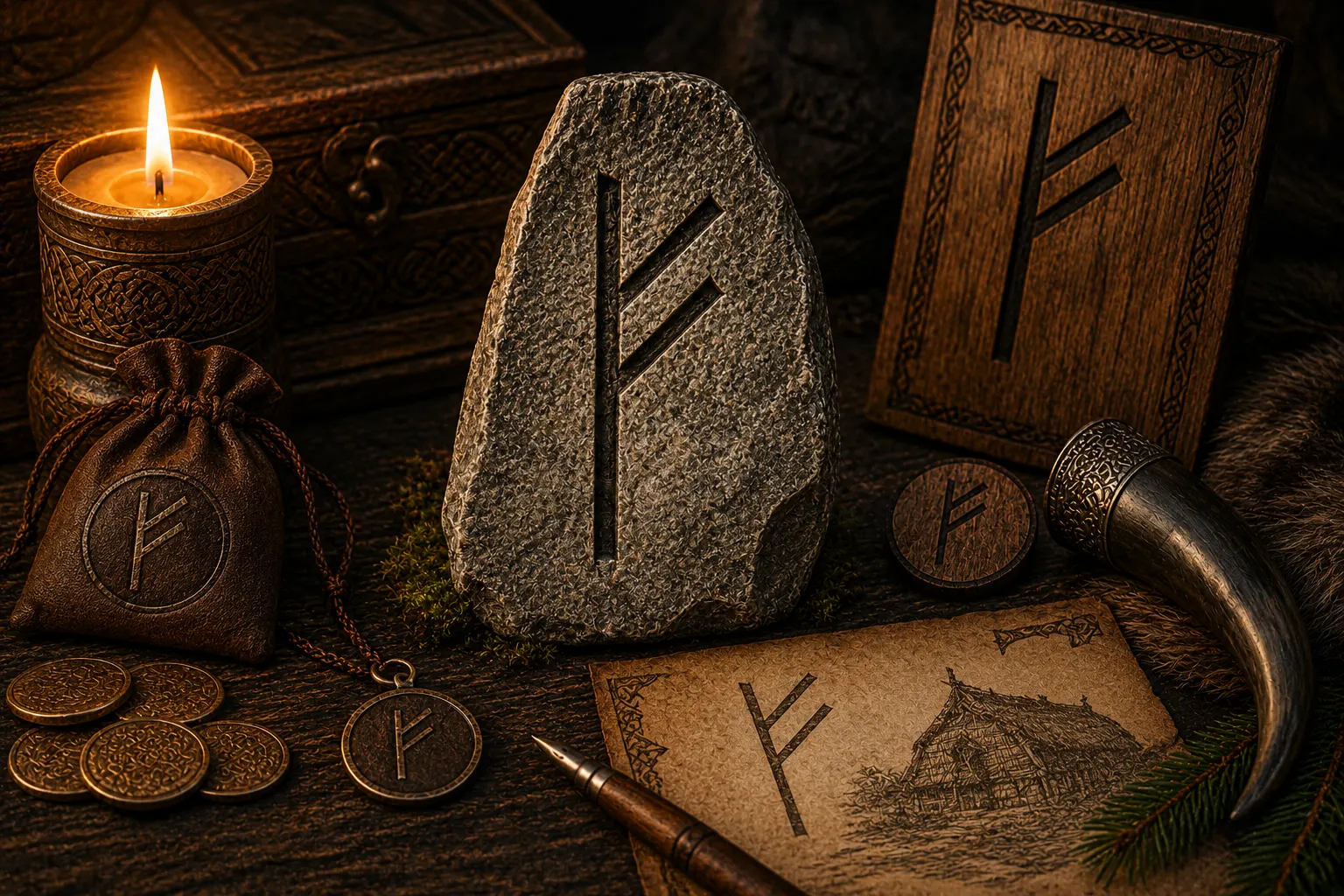
Fehu represents domesticated, movable wealth. Cattle you own, resources you manage, prosperity you have earned through effort. Uruz represents the wild version of that same force. The aurochs that has not been tamed. The raw material that exists before human hands shape it into something useful.
Think of the sequence this way. Fehu is the money in your bank account. Uruz is the ability, the energy, the physical and mental strength you need to earn it in the first place. Fehu is the harvest. Uruz is the storm that waters the field.
The Elder Futhark begins with what you have, then immediately confronts you with what you are made of. That progression tells you something about how the Germanic peoples thought about life. Wealth means nothing if you lack the strength to protect it.
What the Rune Poems Say
Uruz is one of the more debated runes because the three surviving rune poems do not entirely agree on what it means. This disagreement is not a problem. It is actually one of the most revealing things about how rune meanings worked across cultures.
The Anglo-Saxon Rune Poem, the oldest of the three, is the most vivid. It describes the aurochs as a fierce, courageous creature with huge horns that roams the marshes. The poem says it is a “proud moor-stalker” and that only the brave dare to face it. This lines up perfectly with the Proto-Germanic reconstruction of ūruz meaning “aurochs.”
The Norwegian Rune Poem, however, takes a different approach. It associates the rune with úr, describing it as “slag” from iron smelting, and adds that the reindeer runs over frozen snow. The connection between iron slag and the aurochs may seem strange, but both represent raw material in an unrefined state. Slag is what remains after the ore has been heated but before the metal has been fully worked. It is potential, not yet realised.
The Icelandic Rune Poem goes in yet another direction, describing úr as “a shower of rain and the lamentation of the clouds and the ruin of the hay harvest.” Here the rune connects to the wild, uncontrollable force of nature itself, specifically the kind of downpour that destroys a farmer’s careful work in a single afternoon.
Three poems. Three images. But all three point to the same core idea: a force that is powerful, untamed, and indifferent to human wishes.
The Fehu-Uruz Relationship
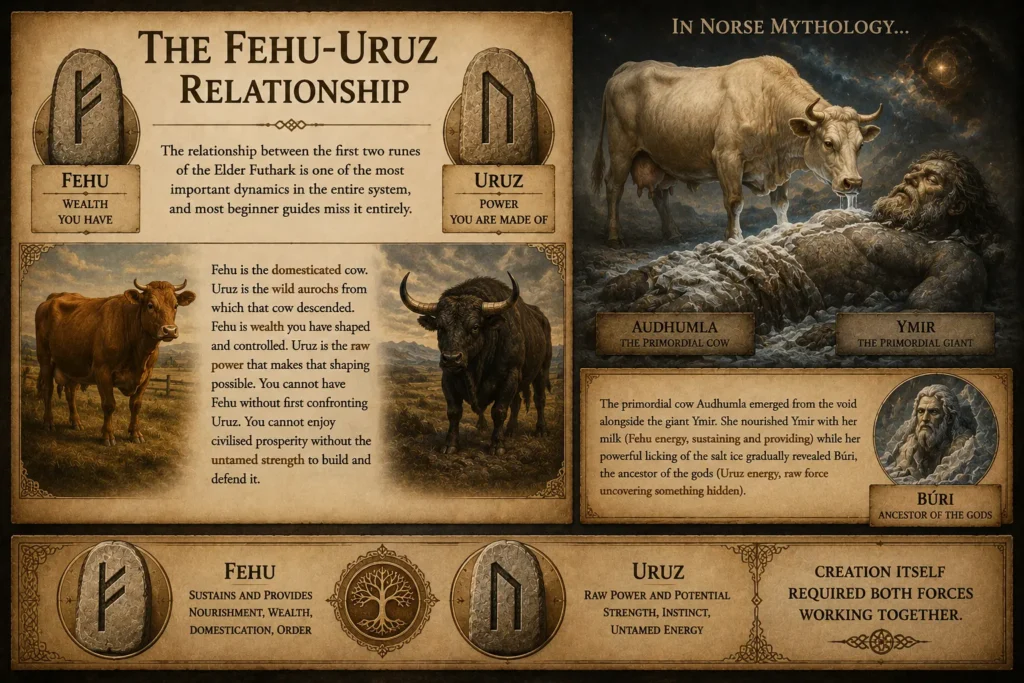
The relationship between the first two runes of the Elder Futhark is one of the most important dynamics in the entire system, and most beginner guides miss it entirely.
Fehu is the domesticated cow. Uruz is the wild aurochs from which that cow descended. Fehu is wealth you have shaped and controlled. Uruz is the raw power that makes that shaping possible. You cannot have Fehu without first confronting Uruz. You cannot enjoy civilised prosperity without the untamed strength to build and defend it.
This pairing also appears in the Norse creation myth. The primordial cow Audhumla emerged from the void alongside the giant Ymir. She nourished Ymir with her milk (Fehu energy, sustaining and providing) while her powerful licking of the salt ice gradually revealed Búri, the ancestor of the gods (Uruz energy, raw force uncovering something hidden). Creation itself required both forces working together.
The Shape of the Rune
The Uruz symbol (ᚢ) consists of a vertical stave with a second line descending from its top at an angle, forming a shape that resembles a doorway, an archway, or depending on interpretation, the profile of an aurochs with its head lowered.
Like all Elder Futhark runes, it uses only vertical and diagonal strokes, a practical necessity since runes were originally carved into wood where horizontal and curved cuts would follow the grain and split the material. The downward angle of the second stroke gives Uruz a sense of weight and groundedness that visually reinforces its meaning. This is not a rune that floats. It plants itself.
Uruz and Health
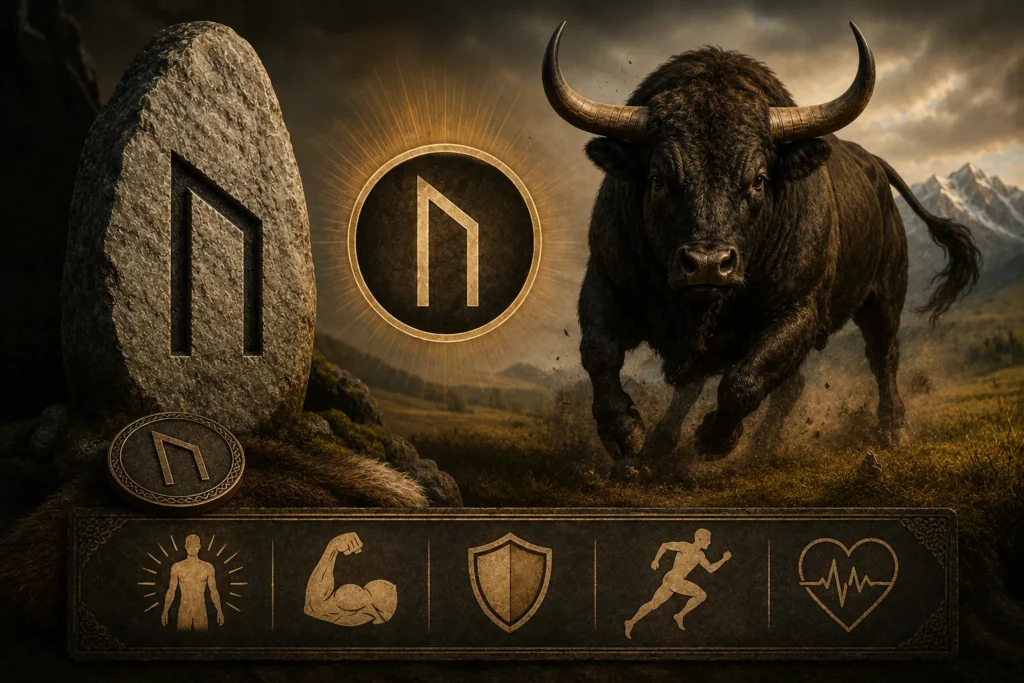
One dimension of the uruz rune meaning that deserves special attention is its connection to physical health and vitality. The aurochs was not just strong. It was vibrantly, overwhelmingly alive. A creature of enormous stamina and resilience, surviving in harsh climates across a territory that stretched from the Atlantic to the Indian subcontinent.
In modern rune practice, Uruz is frequently associated with physical wellbeing, recovery from illness, and the body’s natural ability to heal and strengthen itself. This is not a modern invention. The association between Uruz and vital life force runs through all three rune poems in different forms. The Anglo-Saxon poem emphasises the animal’s fearlessness. The Norwegian poem links the rune to the transformative heat of the forge. The Icelandic poem connects it to the raw energy of storms.
All of these are expressions of the same primal vitality. Uruz does not promise comfort. It promises life in its most intense, demanding, and powerful form.
Common Interpretations in Modern Rune Reading
When Uruz appears in a modern rune reading, most practitioners interpret it through several interconnected themes.
Physical strength and health. Uruz often appears during times when physical vitality is either being tested or being restored. It can point to recovery, increased energy, or the need to pay attention to your body.
Untapped potential. Because the aurochs represents raw, unformed power, Uruz frequently signals that you have reserves of strength you have not yet accessed. Something in your life is waiting to be shaped, but the raw material is already there.
Necessary challenge. Uruz is not a comfortable rune. The aurochs was not a comfortable animal. This rune often appears when a difficult situation is demanding that you rise to meet it rather than retreat. The challenge is not punishment. It is the thing that makes you stronger.
Transformation through effort. The Norwegian Rune Poem’s connection between Uruz and iron slag is instructive. Slag is raw, unrefined, ugly. But it is the byproduct of the process that creates useful metal. Uruz often signals that you are in the middle of a transformative process that feels rough but is producing something valuable.
Some practitioners assign a reversed meaning to Uruz when it appears upside down, typically interpreting it as weakness, missed opportunities, or blocked energy. As with all reversed rune interpretations, this practice was popularised in the 20th century and does not appear in historical sources. The shadow dimensions of Uruz, the overwhelming storm, the bull that gores the unprepared, already exist within the upright meaning.
Uruz in Bind Runes
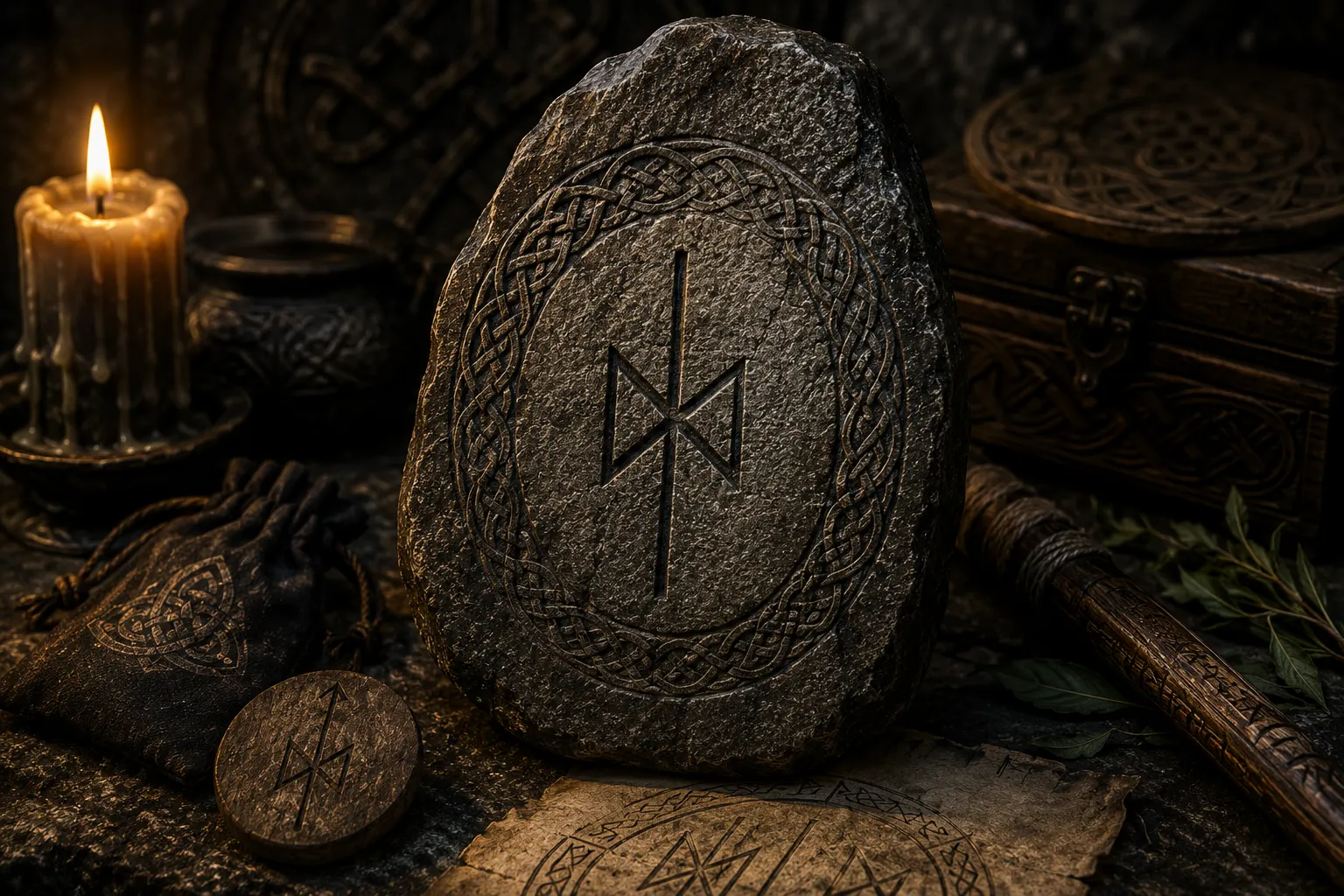
Uruz pairs powerfully with other runes in bind rune combinations. Common pairings include Uruz with Tiwaz (ᛏ) for courageous action, Uruz with Sowilo (ᛊ) for vitality and success, and Uruz with Berkanan (ᛒ) for healing and physical renewal.
Because Uruz represents raw energy rather than directed purpose, it works best when paired with a rune that provides focus. Uruz alone is a charging aurochs. Uruz combined with a rune of direction becomes that same force, aimed precisely where it needs to go.
What Uruz Teaches
The lesson of Uruz is not subtle. Strength is not optional. The world the Norse lived in did not reward passivity, and neither does ours. But the rune also carries a warning embedded in the nature of its animal. The aurochs was powerful, but it is extinct. Raw strength without adaptation, without community, without the willingness to evolve, eventually runs out.
Uruz asks a simple question: do you have the strength for what comes next? And if the answer is not yet, it reminds you that the capacity is already there. The aurochs inside has not been tamed. It is waiting.