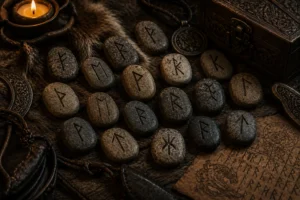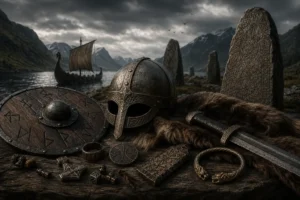

If you think norse runes were just an old way of writing, you are only seeing half the picture. These symbols were carved into swords before battle, etched onto gravestones to honour the dead, and even scratched into the walls of one of the most sacred buildings in the world by bored Viking soldiers. Norse runes were a writing system, yes. But they were also a belief system, a magical toolkit, and a cultural identity rolled into one.
Let’s walk through the real history, the actual meanings, and the surprisingly varied ways nordic runes were used across centuries of Norse life.
A Quick Clarification: What Makes Runes “Norse”?
Not all runes are norse runes. The runic writing system was used by Germanic peoples across a wide region of Europe, from the Balkans to Britain. But when people say “norse runes” or “nordic runes,” they are usually referring to the runic systems used in Scandinavia, specifically the Elder Futhark and the Younger Futhark.
Elder Futhark, the older of the two, contains 24 runes and was used across Northern Europe from roughly 150 CE to 700 CE. Younger Futhark, which streamlined the system down to 16 runes, became the dominant script during the Viking Age, roughly 800 to 1100 CE. Both systems are rooted in the Norse world, and both carry meanings that go far beyond simple phonetics.
Where Norse Runes Came From
The exact origin of nordic runes is still debated by scholars, and has been for over a century. The leading theory is that they evolved from one of the Old Italic alphabets, possibly through early contact between Germanic tribes and Roman or Greek traders. The angular shapes of the characters, the phonetic structure, and certain letter forms all show traces of Mediterranean influence.
But the Norse had their own explanation, and it is a lot more dramatic.
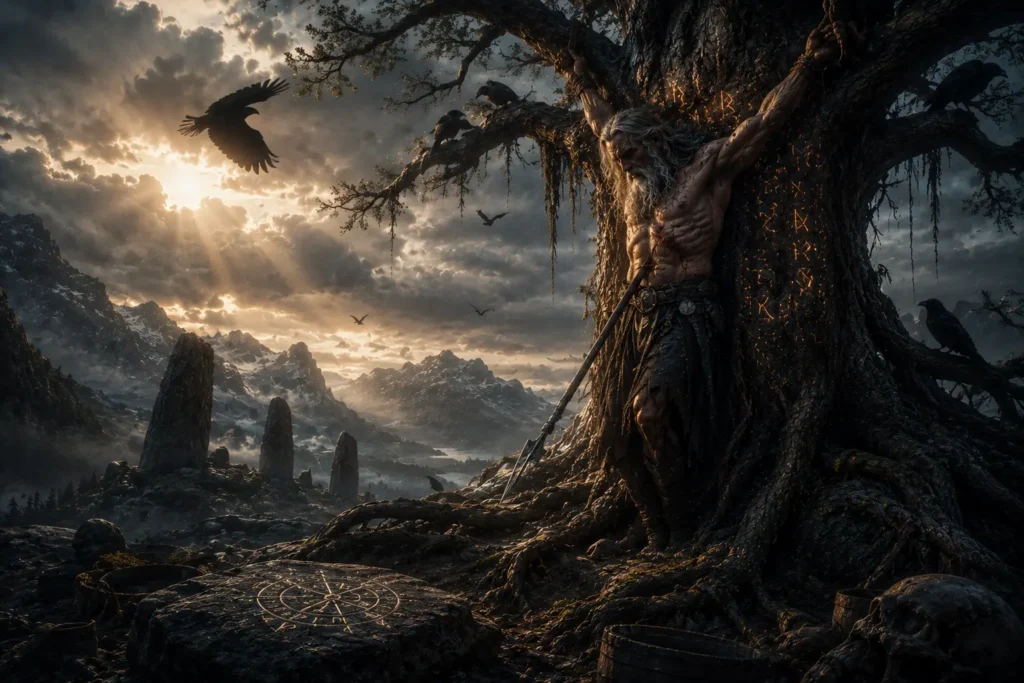
According to the Hávamál, a poem preserved in the Poetic Edda, the god Odin did not create runes. He suffered for them. He hung himself from Yggdrasil, the world tree, for nine nights without food or water, pierced by his own spear. At the edge of death, he perceived the runes and seized them. In Norse mythology, knowledge was never free. It had to be earned through sacrifice, and the runes were the ultimate prize.
This myth shaped how the Norse treated their runes. These were not just marks on a page. They were symbols that Odin himself bled for.
The Two Main Norse Runic Systems
Elder Futhark: The Original 24
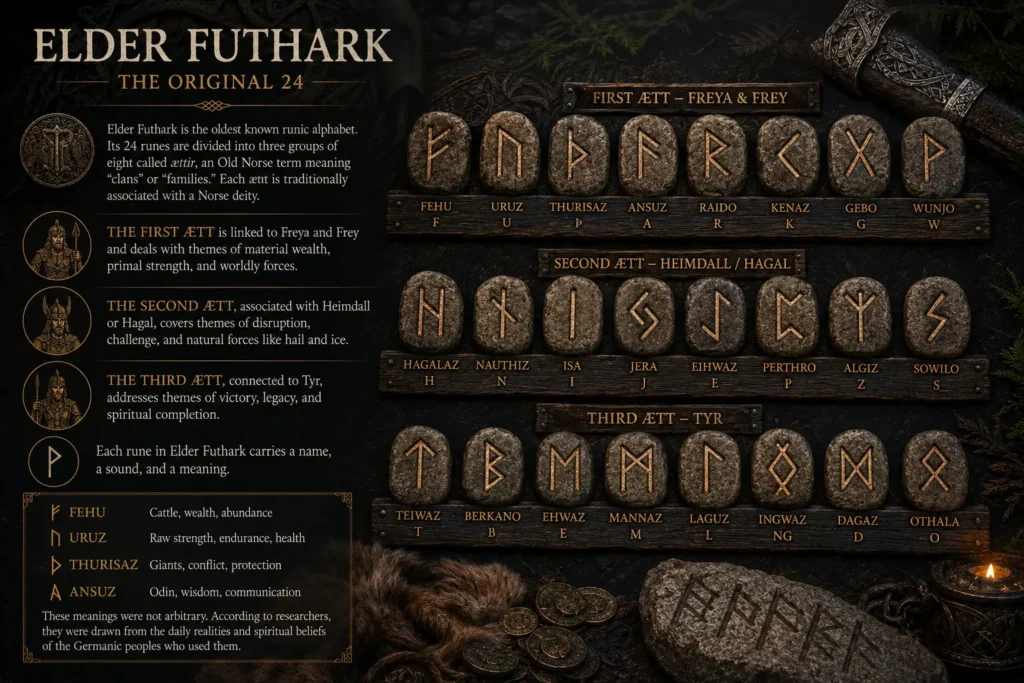
Elder Futhark is the oldest known runic alphabet. Its 24 runes are divided into three groups of eight called ættir, an Old Norse term meaning “clans” or “families.” Each ætt is traditionally associated with a Norse deity.
The first ætt is linked to Freya and Frey and deals with themes of material wealth, primal strength, and worldly forces. The second ætt, associated with Heimdall or Hagal, covers themes of disruption, challenge, and natural forces like hail and ice. The third ætt, connected to Tyr, addresses themes of victory, legacy, and spiritual completion.
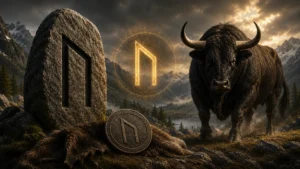
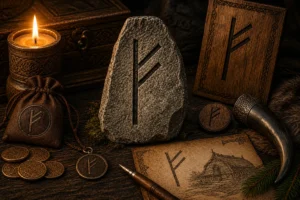
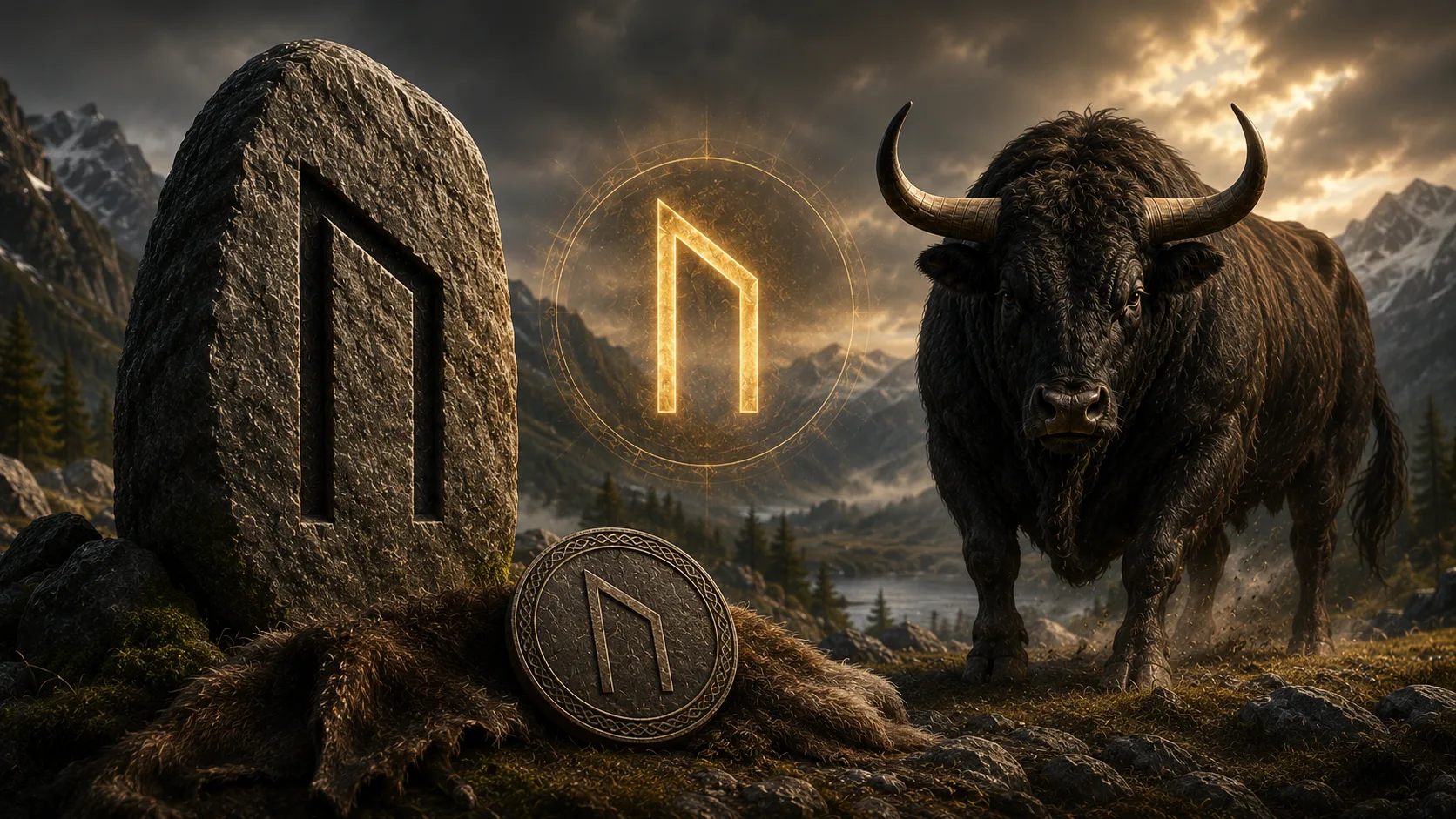
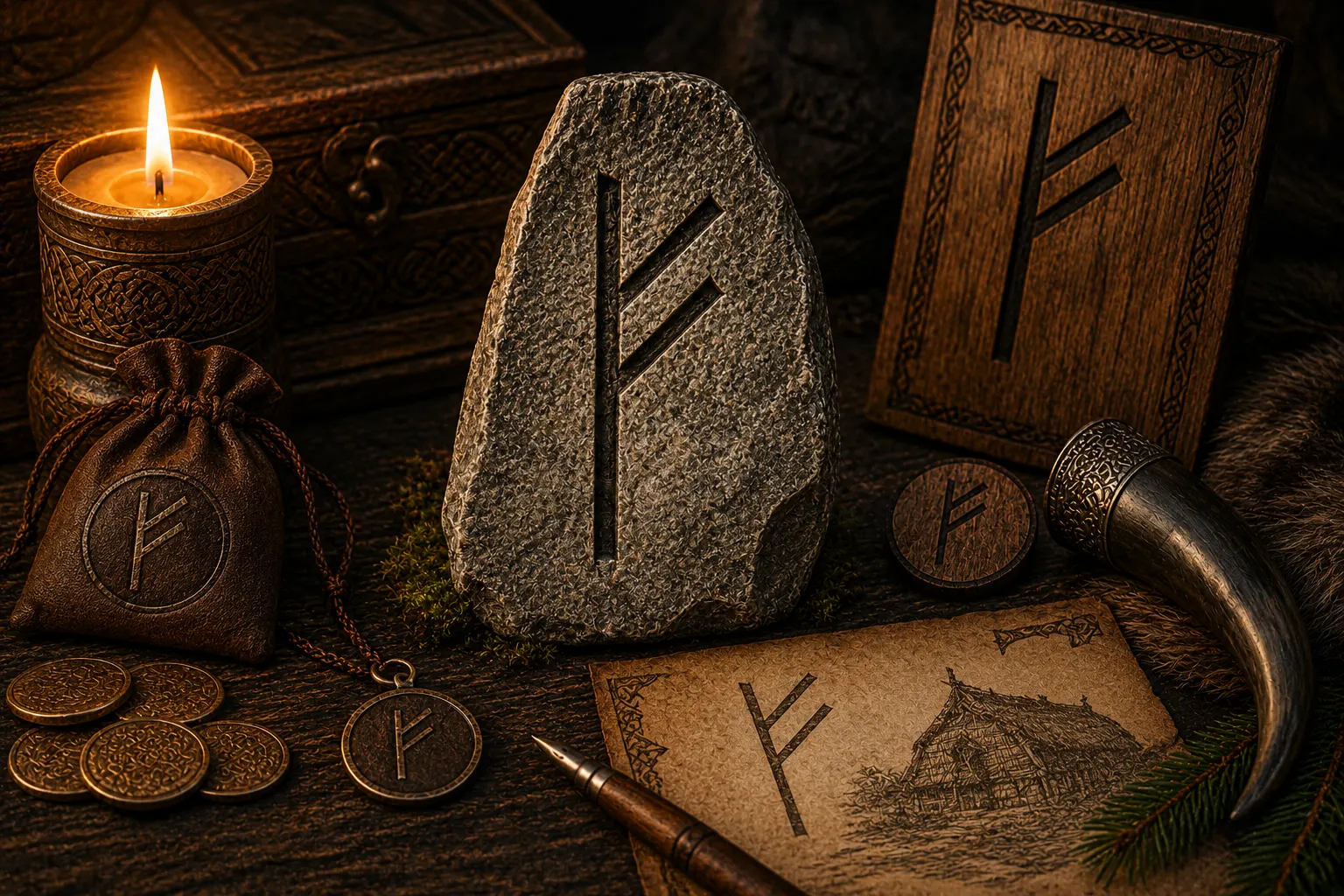
Each rune in Elder Futhark carries a name, a sound, and a meaning. Fehu (ᚠ) means cattle and wealth. Uruz (ᚢ) represents raw physical strength. Thurisaz (ᚦ) connects to giants, conflict, and protection. Ansuz (ᚨ) is tied to Odin and represents wisdom, communication, and divine breath. These meanings were not arbitrary. According to researchers, they were drawn from the daily realities and spiritual beliefs of the Germanic peoples who used them.
Younger Futhark: The Viking Age Script
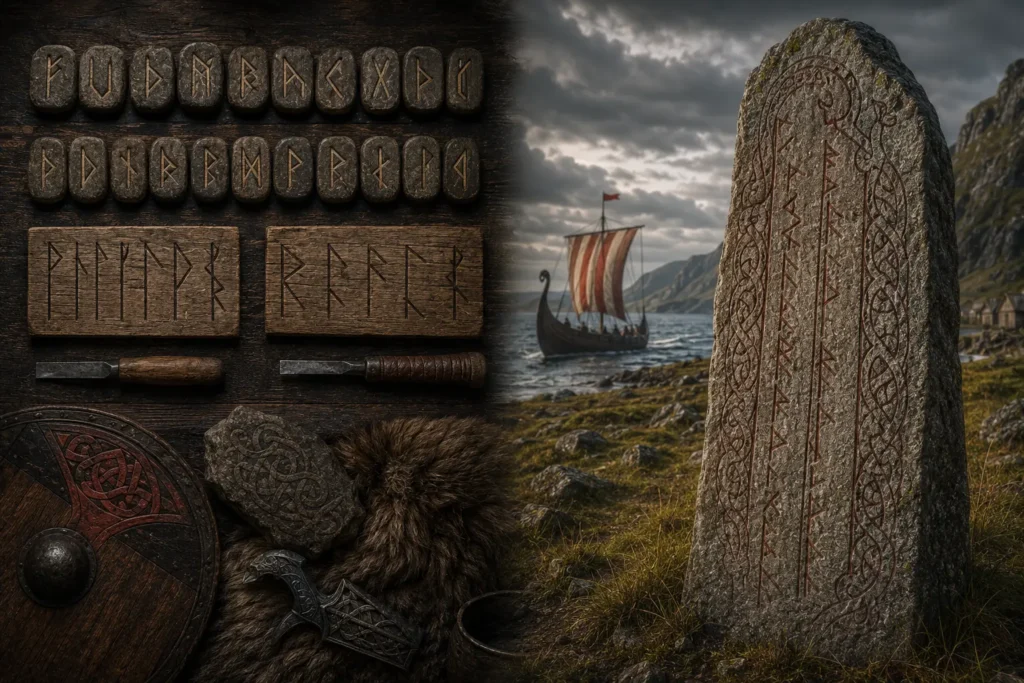
Around 800 CE, as the Viking Age began, something strange happened. The Old Norse language was growing more complex, with more vowel sounds and phonetic nuances than its predecessor. But instead of adding runes, the Norse reduced the alphabet. Younger Futhark dropped from 24 characters to just 16, meaning each rune now had to pull double or triple duty, representing multiple sounds.
Younger Futhark came in two regional styles. Long-branch runes were primarily used in Denmark and are characterised by taller, more formal strokes. Short-twig runes, common in Sweden and Norway, used simplified, quicker forms that were easier to carve in everyday situations.
This is the runic system carved into the thousands of runestones that still dot the Scandinavian landscape today.
How Norse Runes Were Actually Used
This is where things get really interesting. Norse runes served purposes that ranged from the completely mundane to the deeply sacred.
Everyday Communication
The most common use of norse runes was practical. People carved ownership marks on personal belongings. They labeled combs, tools, and weapons. They left messages and recorded names. Short runic inscriptions appear on everyday artifacts from Viking towns and trading posts, according to collections at the Viking Ship Museum in Roskilde, Denmark.
Think of it less like formal writing and more like how we use sticky notes or name tags. Quick, functional, and everywhere.
Memorial Runestones
Runestones are probably the most iconic use of nordic runes. These large carved stones were erected to commemorate the dead, celebrate achievements, and sometimes stake political claims. The practice peaked in the 11th century, particularly in Sweden, where the majority of surviving runestones are found.
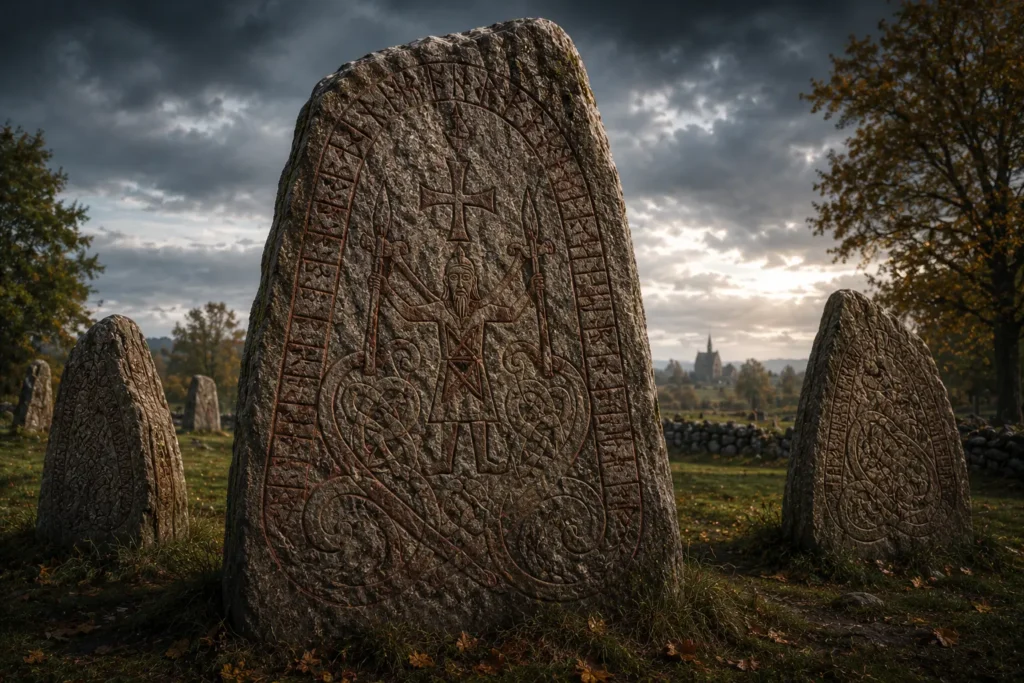
The most famous example is the Jelling Stones in Denmark. Around the year 965, King Harald Bluetooth erected a massive runestone declaring that he had unified Denmark and Norway and converted the Danes to Christianity. The National Museum of Denmark refers to this stone as “Denmark’s birth certificate.” It is now a UNESCO World Heritage Site, and the Christ figure carved on it appears in every modern Danish passport.
And yes, Bluetooth technology is named after Harald Bluetooth. The idea was that just as Harald unified Scandinavian tribes, the technology would unify communication protocols. Even the Bluetooth logo is a combination of Harald’s runic initials.
Viking Graffiti
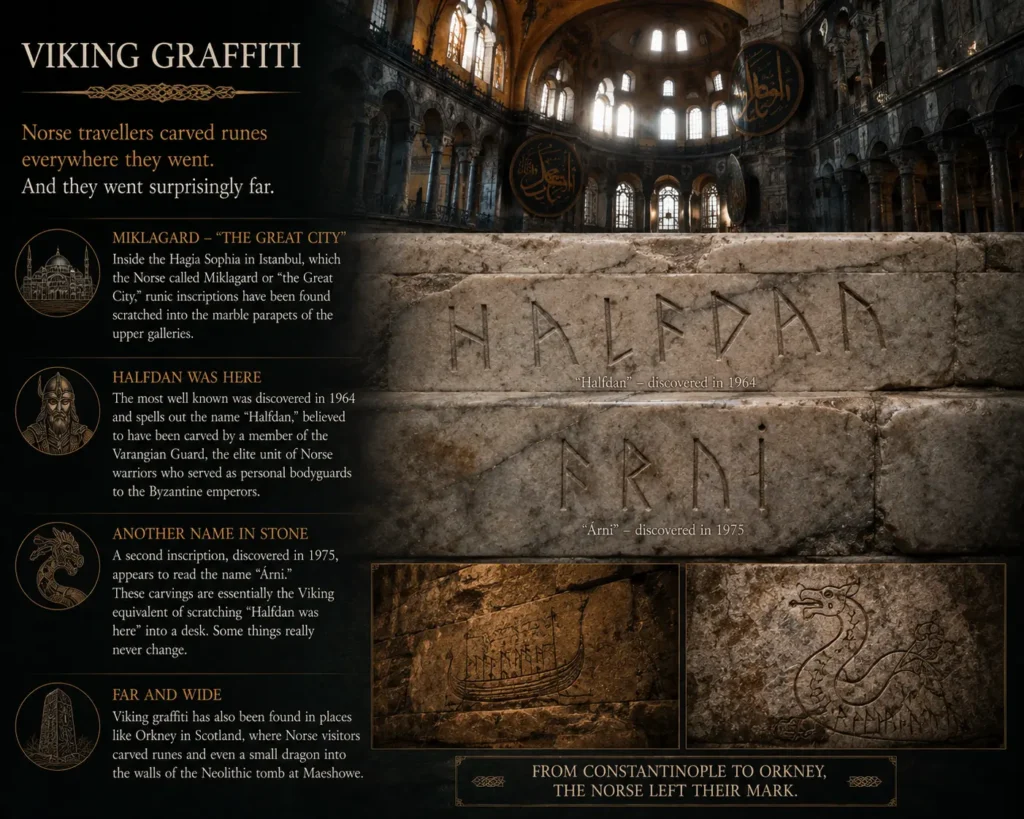
Norse travellers carved runes everywhere they went. And they went surprisingly far.
Inside the Hagia Sophia in Istanbul, which the Norse called Miklagard or “the Great City,” runic inscriptions have been found scratched into the marble parapets of the upper galleries. The most well known was discovered in 1964 and spells out the name “Halfdan,” believed to have been carved by a member of the Varangian Guard, the elite unit of Norse warriors who served as personal bodyguards to the Byzantine emperors.
A second inscription, discovered in 1975, appears to read the name “Árni.” These carvings are essentially the Viking equivalent of scratching “Halfdan was here” into a desk. Some things really never change.
Viking graffiti has also been found in places like Orkney in Scotland, where Norse visitors carved runes and even a small dragon into the walls of the Neolithic tomb at Maeshowe.
Magic and Protection
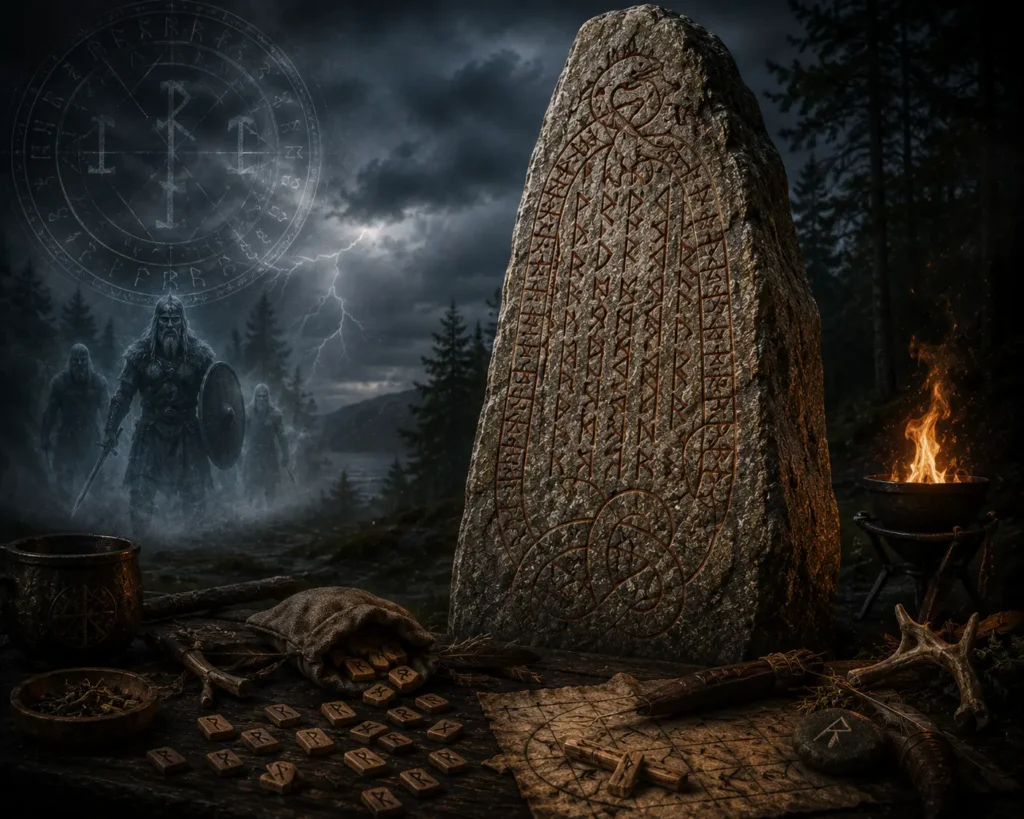
Norse runes were deeply connected to magical practices. The Poetic Edda describes runes being used for healing, for victory in battle, for calming storms at sea, and for cursing enemies. Archaeological finds back this up.
The Björketorp Runestone in Blekinge, Sweden, dating to the 6th or 7th century, stands over 4 metres tall and carries one of the most chilling inscriptions ever found. Translated from Proto-Norse, it reads: “I, master of the runes, conceal here runes of power. Incessantly plagued by maleficence, doomed to insidious death is he who breaks this monument. I prophesy destruction.”
That is not a greeting card. That is a curse, carved in stone, meant to protect whatever lies beneath from disturbance. Local legend in Sweden even claims that a man who once tried to remove the stone met a gruesome end when the fire he set to crack it blew back and killed him.
Whether you believe in runic curses or not, the people who carved them certainly did. And that belief shaped how runes were used across Norse culture.
Weapons and Warfare
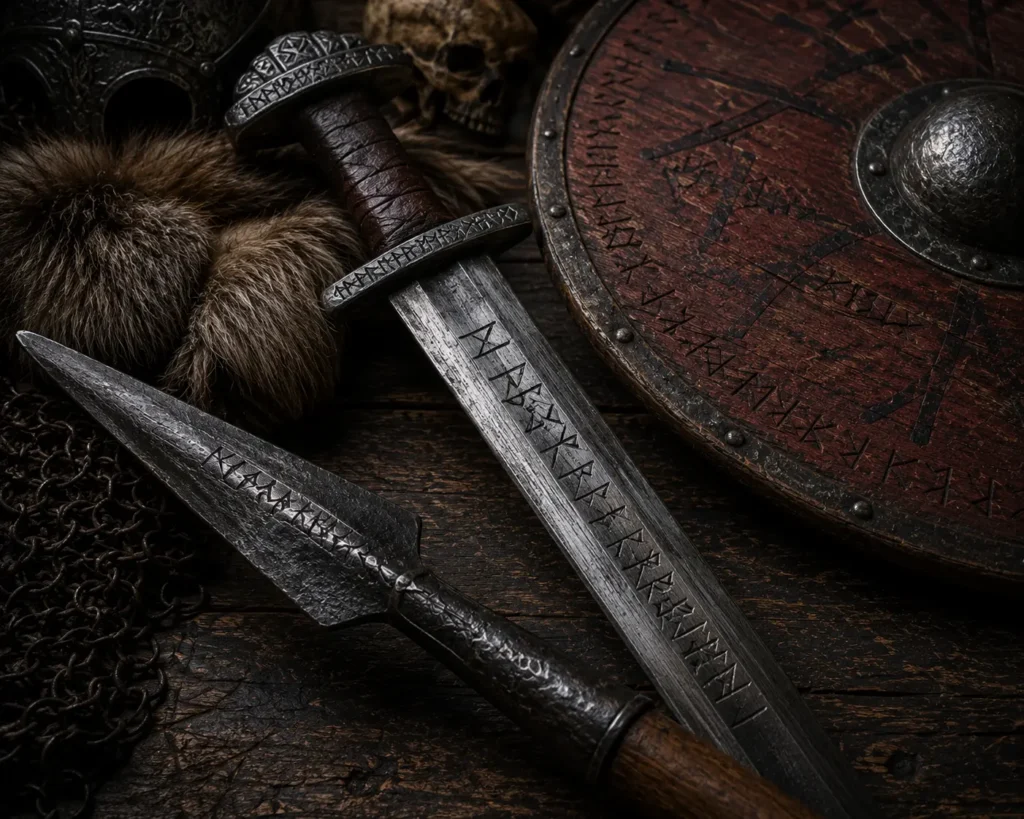
Warriors carved runes onto their swords, spears, and shields. Some inscriptions named the weapon. Others named the owner. And some appear to have been intended to magically charge the weapon or invoke protection from the gods.
The Øvre Stabu spearhead, found in Norway and dated to around 160 CE, bears one of the oldest known runic inscriptions. It reads raunijaz, which scholars believe means “the tester” or “the one who puts to the test.” Naming your spear “The Tester” is a level of confidence most of us can only aspire to.
What Norse Rune Meanings Tell Us
Every rune in the Elder Futhark carries a meaning that reflects the world the Norse lived in. These were not abstract philosophical concepts. They were grounded in real life.
Fehu (ᚠ) means wealth, specifically cattle, which was the primary measure of prosperity. Raidho (ᚱ) means journey, both physical travel and the metaphorical journey of life. Isa (ᛁ) means ice, representing stillness, stagnation, and the harsh reality of northern winters. Sowilo (ᛊ) means sun, a symbol of hope, energy, and victory in a culture where sunlight was genuinely scarce for months at a time.
The rune meanings were not fixed in a rigid way. Context mattered. A rune carved on a weapon carried a different weight than the same rune carved on a comb. The meanings flexed and adapted, just like the language itself.
How Norse Runes Faded from Daily Use
The decline of norse runes was gradual, not sudden. As Christianity spread through Scandinavia in the 10th and 11th centuries, the Latin alphabet came with it. Churches, legal documents, and official records increasingly used Latin script.
But runes did not vanish overnight. In parts of Sweden, runic writing continued well into the Middle Ages. Among the Sami people in northern Scandinavia, rune use may have persisted even longer. And in Iceland, knowledge of runes was preserved in manuscripts and sagas long after the rest of Europe had moved on.
Interestingly, the shift was not always hostile. Some Christian artefacts from the transitional period actually carry runic inscriptions alongside Christian prayers, suggesting a period of cultural coexistence rather than outright replacement.
Norse Runes in the Modern World
Today, norse runes have found new life in multiple ways. Scholars and linguists study them to understand early Germanic languages and Viking Age culture. Practitioners use Elder Futhark rune sets for divination and personal reflection. And popular culture, from Tolkien’s Lord of the Rings to Marvel’s Thor to dozens of video games, draws heavily on runic imagery.
The fascination makes sense. Norse runes are not just letters. They are a window into a culture that valued strength, wisdom, sacrifice, and the raw power of words carved into stone. Two thousand years later, those carvings are still speaking.
What to Explore Next
Now that you understand the history and uses of norse runes, the logical next step is learning the individual rune meanings in depth. Each of the 24 Elder Futhark runes has its own story, its own associations, and its own place within the three ættir. Whether your interest is historical, spiritual, or just plain curious, there is a lot more to uncover.