
Vikings carved their names into the marble walls of the Hagia Sophia. They scratched boasts and jokes into a 5,000 year old tomb in Scotland. They raised massive stones along roads and bridges so that every traveller who passed would read the names of their dead. Viking runes were never just an alphabet. They were how an entire civilisation announced itself to the world.
But here is the thing most people get wrong. When we say “viking runes,” we are usually talking about a very specific writing system used during a very specific period. And that system is stranger, more clever, and more widespread than most beginners realise.
What Exactly Are Viking Runes?
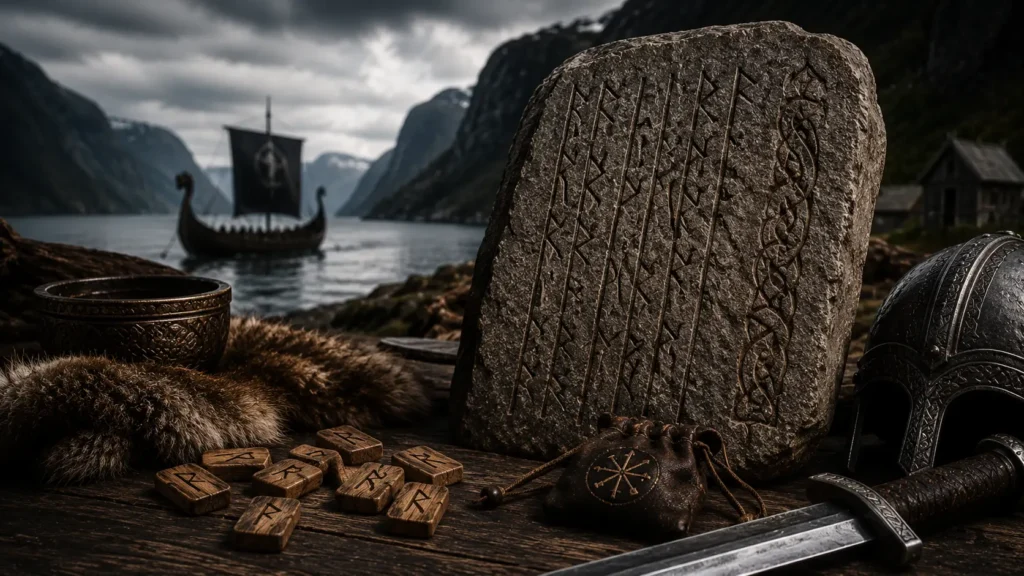
Viking runes refer to the runic writing system used by the Norse peoples during the Viking Age, which historians place between roughly 793 and 1066 CE. The specific alphabet the Vikings used is called the Younger Futhark, a 16 character system that replaced the older 24 rune Elder Futhark around the start of the 8th century.
The name “Futhark” comes from the first six runes in the sequence: F, U, Th, A, R, and K. It works the same way we call our writing system the “alphabet” after the Greek letters Alpha and Beta.
Now, here is what makes Younger Futhark genuinely unusual. By the time the Viking Age began, the Old Norse language had grown more complex than its predecessor. It had more vowel sounds, more phonetic variety, and more nuance. So logically, you would expect the alphabet to grow. Instead, the Norse did the opposite. They cut the alphabet from 24 runes down to 16.
That means each rune had to represent multiple sounds. A single character might cover two or three different phonemes depending on context. Reading viking runes was not just about knowing the symbols. It required understanding the language well enough to fill in the gaps.
The Younger Futhark: The Viking Alphabet Explained
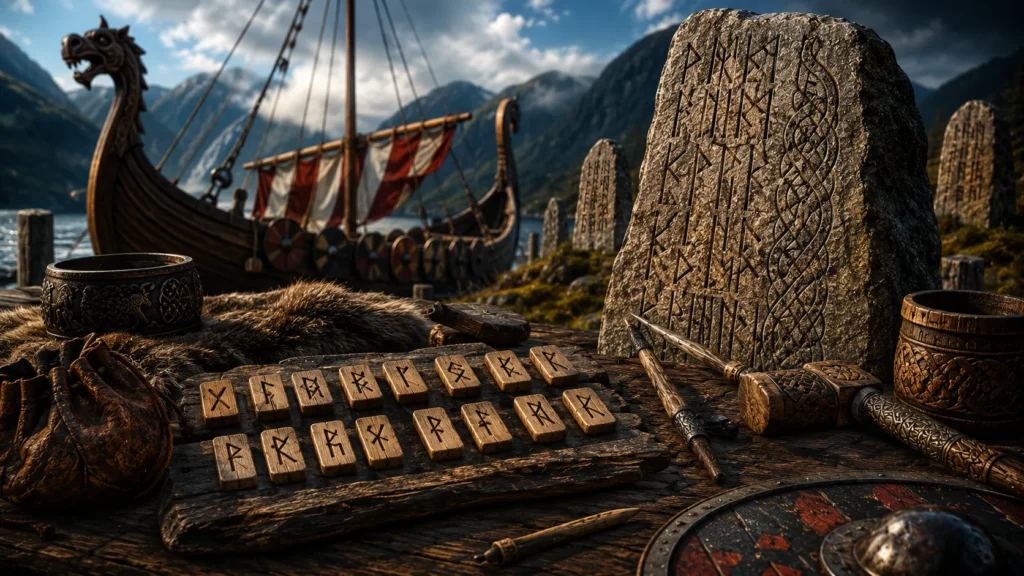
The 16 runes of the Younger Futhark were the writing tools of the Viking Age. They came in two main regional styles.
Long-branch runes were the more formal version, primarily used in Denmark. The strokes are taller and more deliberate, suited for important inscriptions on stone monuments. Short-twig runes were common in Sweden and Norway. They used simplified, quicker forms that were practical for everyday carving on wood and bone.
There was also a third variant called staveless runes, or Hälsinge runes, which stripped the characters down even further by removing the main vertical stroke. These appear mostly in the Swedish province of Hälsingland.
According to the Swedish National Heritage Board, there are approximately 7,000 runic inscriptions documented worldwide, and about half of those are Viking Age runestones. The vast majority are found in Sweden, with the Uppland region north of Stockholm alone containing over 1,300 stones.
Viking Runes and Meanings: What Each Symbol Represented
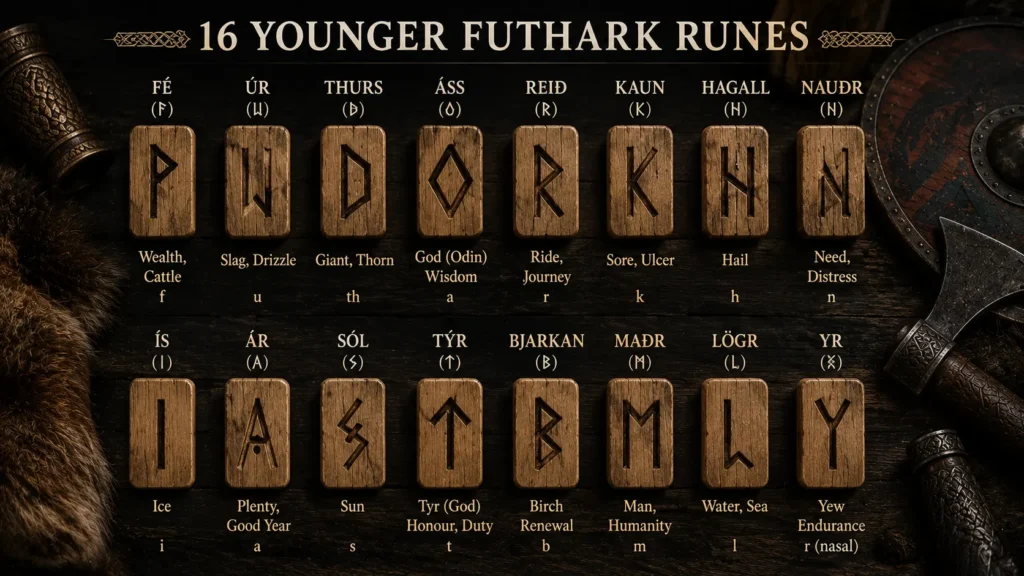
Every rune in the Viking system carried a phonetic value and a name rooted in the natural world or Norse culture. Understanding viking runes and meanings requires looking at both layers.
16 Younger Futhark runes
Here are the 16 Younger Futhark runes and what they represented.
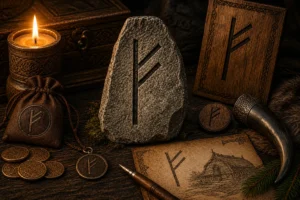
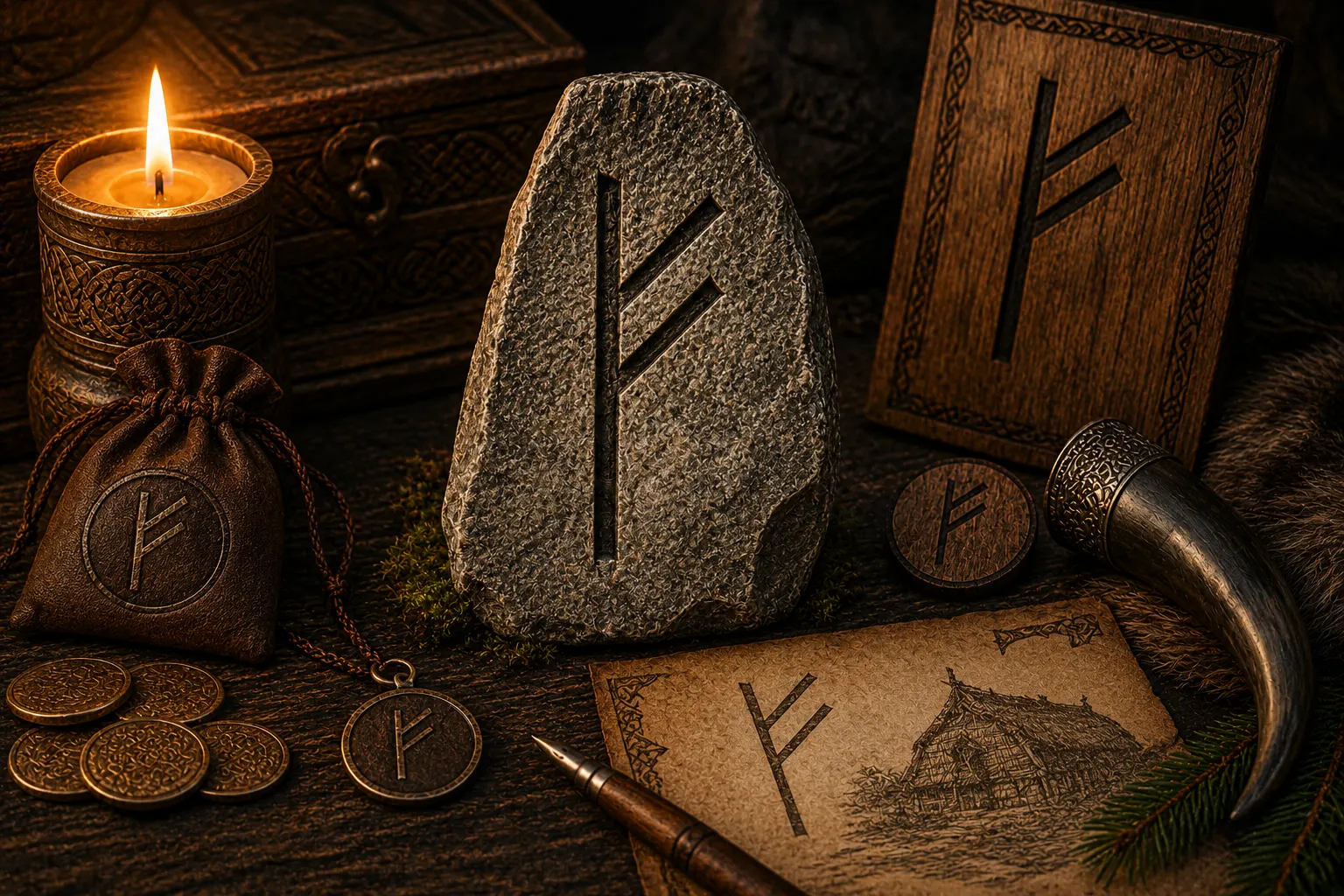
Fé (ᚠ) represented the “f” sound and meant wealth or cattle. In a society where livestock was currency, this rune spoke directly to prosperity and abundance.
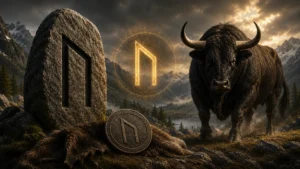
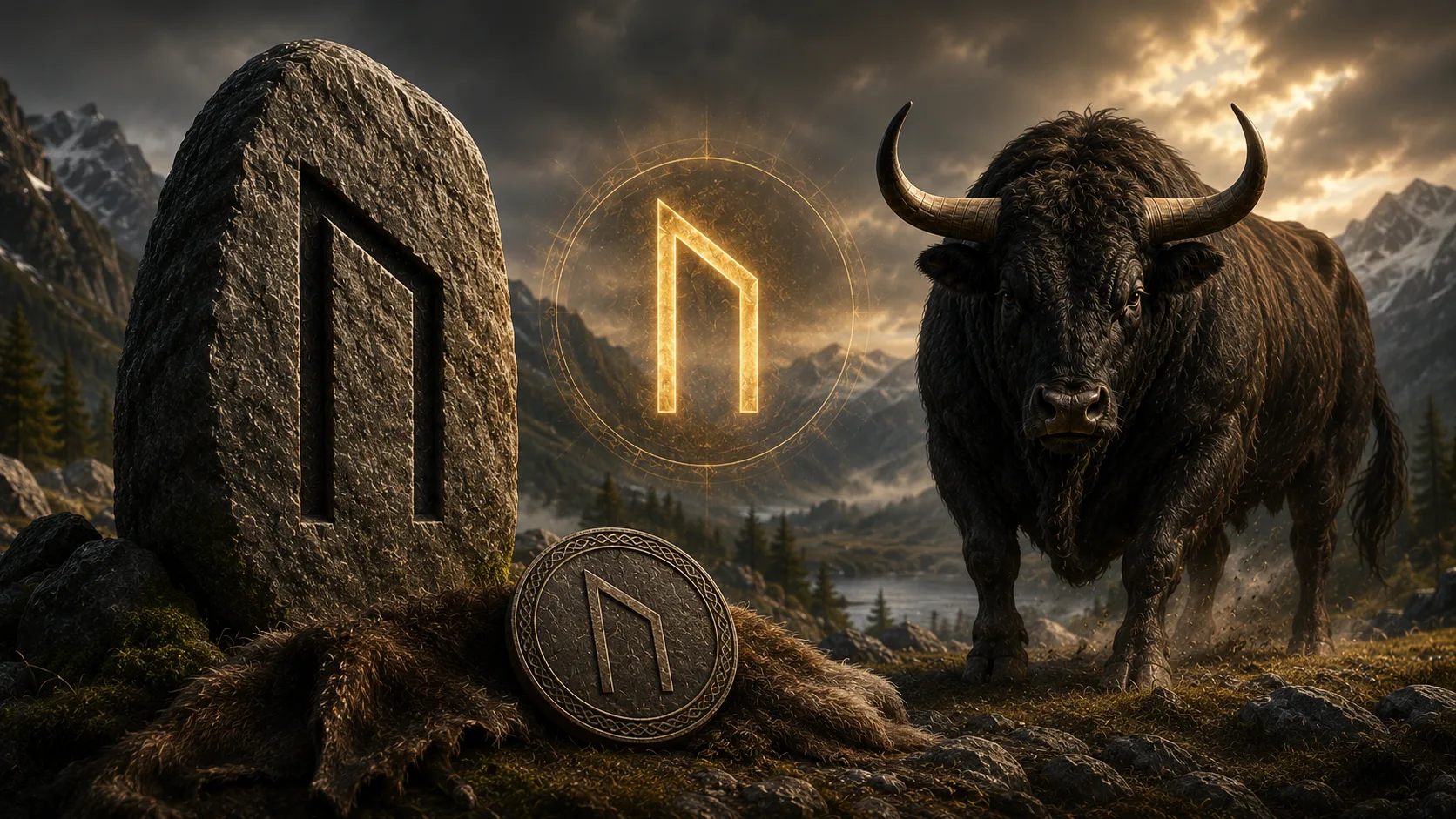
Úr (ᚢ) carried the “u” sound and referred to slag or drizzle, though its Elder Futhark ancestor Uruz was linked to the wild aurochs. It symbolised raw, untamed strength.
Thurs (ᚦ) represented the “th” sound and meant giant or thorn. It connected to the jötnar, the giants of Norse mythology, and carried associations of chaos, danger, and the forces that challenge the gods.
Áss (ᚬ) carried the “a” sound and referred to a god, specifically Odin in most interpretations. It represented wisdom, divine communication, and the breath of inspiration.
Reið (ᚱ) represented the “r” sound and meant ride or journey. In a culture built on exploration, trade routes, and long voyages across open ocean, this rune held enormous practical and symbolic weight.
Kaun (ᚴ) carried the “k” sound and meant sore or ulcer. It represented illness, pain, and mortality. Not every rune was pleasant, and the Norse did not shy away from acknowledging the harder parts of existence.
Hagall (ᚼ) represented the “h” sound and meant hail. It symbolised destructive natural forces, disruption, and events beyond human control.
Nauðr (ᚾ) carried the “n” sound and meant need or distress. It pointed to hardship, constraint, and the kind of desperation that forces people to act.
Ís (ᛁ) represented the “i” sound and meant ice. In Scandinavia, ice was not a metaphor. It was a daily, sometimes deadly reality. This rune symbolised stillness, stagnation, and the dangerous beauty of frozen landscapes.
Ár (ᛅ) carried the “a” sound (a second one, since the alphabet was compressed) and meant plenty or good year. It represented harvest, reward, and the prosperity that came from a season well worked.
Sól (ᛋ) represented the “s” sound and meant sun. In a land where winter darkness could last months, the sun was not just warmth. It was hope, victory, and life itself.
Týr (ᛏ) carried the “t” sound and was named after the god Tyr, the Norse god of war, justice, and self-sacrifice. This rune represented honour, duty, and the willingness to pay a personal cost for the greater good.
Bjarkan (ᛒ) represented the “b” sound and meant birch. The birch tree was one of the first to return after winter, making it a symbol of renewal, new beginnings, and fertility.
Maðr (ᛘ) carried the “m” sound and meant man or human. It represented humanity, community, and the social bonds that held Norse society together.
Lögr (ᛚ) represented the “l” sound and meant water or sea. For a seafaring culture that built some of the finest ships in human history, water was both livelihood and danger.
Yr (ᛦ) carried a sound similar to a nasalised “r” and meant yew. The yew tree was associated with endurance and resilience, and yew wood was prized for making bows.
Famous Viking Rune Inscriptions You Should Know
Viking runes survive on thousands of artefacts and monuments. A few stand out as genuinely remarkable.
The Rök Runestone
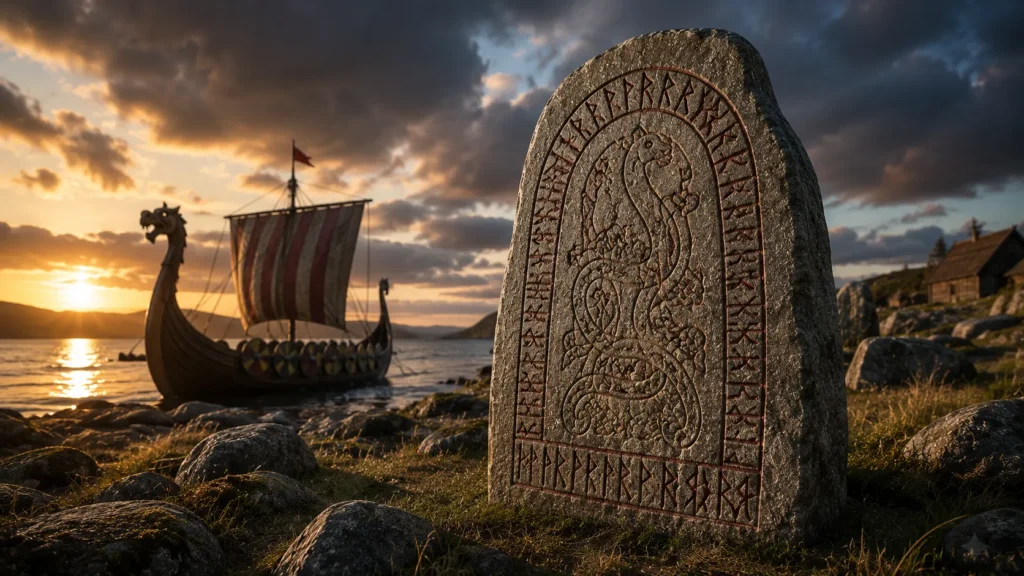
Located in Östergötland, Sweden, the Rök Runestone is often called the “emperor of runestones.” Henrik Williams, a runologist at Uppsala University, gave it that title, and it earns it. The stone stands nearly 2.5 metres tall, weighs about five tons, and all five of its visible sides are covered in runes. With approximately 760 characters arranged across 28 lines, it carries the longest known runic inscription in stone.
The inscription was commissioned by a man named Varin in memory of his dead son Vämod around 800 CE. What makes it extraordinary is not just the length but the complexity. Varin used multiple runic styles, including cipher runes and references to both Younger Futhark and the older Elder Futhark system. The text includes poetic verses, mythological allusions, and what some researchers believe are references to a climate crisis that devastated Scandinavia in the 6th century.
The Jelling Stones
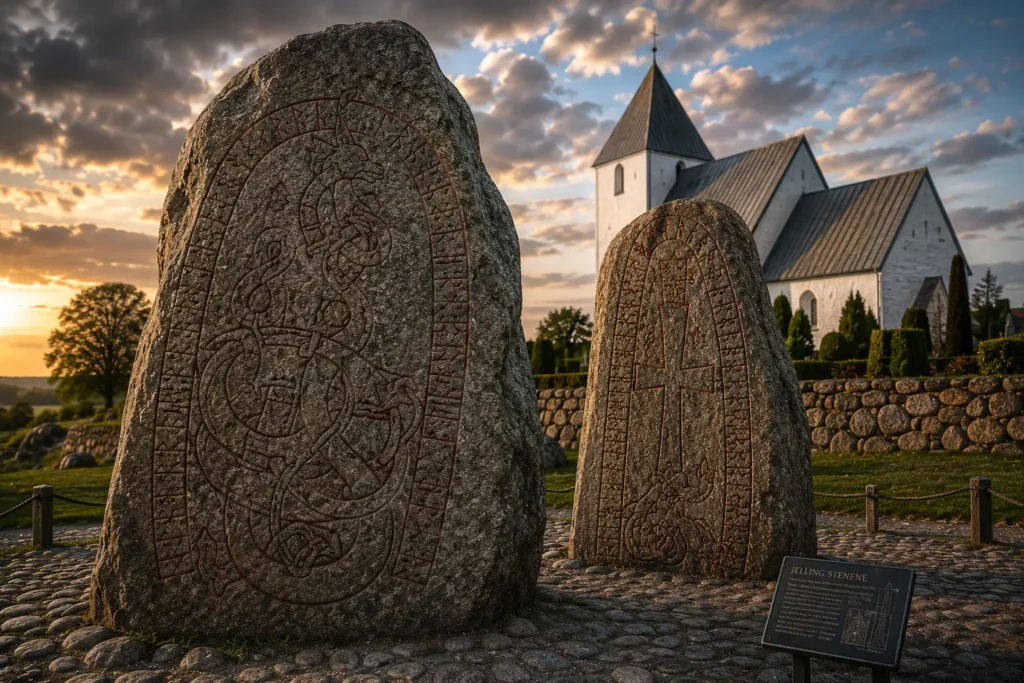
Around the year 965, King Harald Bluetooth erected a massive runestone in Jelling, Denmark, declaring that he had unified Denmark and Norway and converted the Danes to Christianity. The National Museum of Denmark calls this stone “Denmark’s birth certificate.” It became a UNESCO World Heritage Site in 1994 and remains one of the most important runic inscriptions ever found. The Christ figure carved on the stone is the oldest known depiction of Christ in Scandinavia and still appears in every modern Danish passport.
The Maeshowe Graffiti
In the Orkney Islands off the coast of Scotland, a group of Norse warriors broke into Maeshowe, a Neolithic tomb built around 3000 BCE, during a snowstorm in the 12th century. According to the Orkneyinga Saga, two of the men went insane while sheltering inside. But before leaving, the group carved over 30 runic inscriptions into the ancient walls.
These inscriptions form the largest collection of runic writing found outside Scandinavia. Some are poetic. Some are boastful. One reads “These runes were carved by the man most skilled in runes in the western ocean.” Another simply announces a name and the fact that the person was there. As the Viking Ship Museum in Roskilde has noted, this kind of graffiti was remarkably common wherever Vikings travelled.
Why Viking Runes Still Matter
The enduring appeal of viking runes is not hard to understand. These symbols connect us to a culture that valued courage, storytelling, craftsmanship, and a blunt honesty about the harshness of life. Each rune acknowledged reality as it was. Wealth and ice. Harvest and need. The sun and the grave.
In parts of Sweden, runic writing did not actually die out after the Viking Age ended. The province of Dalarna kept a local form of runes, called Dalecarlian runes, in use well into the 20th century, making it what many scholars consider the last stronghold of Germanic script.
Today, viking runes appear in tattoos, jewellery, video games, films, and spiritual practices around the world. But behind every modern use sits a real history stretching back over a thousand years. Every symbol on that tattoo once meant something to a farmer, a warrior, a grieving father, or a bored soldier scratching his name into a marble wall very far from home.
Where to Go Next
If you want to go deeper into viking runes and meanings, the next step is exploring each rune individually. Every one of the 16 Younger Futhark symbols has layers of cultural context, mythological associations, and historical evidence behind it. And if your interest extends further back, the 24 runes of the Elder Futhark offer an even richer and more complex system to study.
The Vikings left their marks all over the world. The runes are how those marks still speak.